



By Janice Lozano
What was presented to the public as a space for “togetherness and healing” at this year’s Lapulapu commemoration has left many in the Filipino community asking a difficult but necessary question: who was this event truly for?
While the event was intended to bring the community together in the aftermath of tragedy, and while organizing such gatherings in a post-trauma context is undeniably complex, many still found themselves reflecting on whether the format aligned with the needs of those most deeply affected.
Organizers framed the rebranded Lapulapu Day as a response to community need—a moment to gather, process, and begin healing. They also acknowledged that it might not resonate with everyone. However, when an event is positioned as a healing space, particularly in the context of trauma, expectations naturally center on care, intention, and meaningful listening rather than spectacle.
For some attendees, what unfolded felt misaligned with those principles.
Upon arrival, the setting resembled a large-scale public festival, with an outdoor stage, sponsor tents, food vendors, and a visible operational presence that included Vancouver Police, firefighters, ambulances, and reinforced barricades. While such infrastructure is not unusual for large public events, the overall tone for many felt more performative and celebratory than reflective.
This created a sense of disconnect for those who expected a quieter, more contained space for remembrance and grief.
That tension was further shaped by developments in the lead-up to the event. The night before, several performers reportedly withdrew, along with some vendors. While the program proceeded, these last-minute changes contributed to broader questions within parts of the community about readiness, alignment, and whether concerns raised earlier had been fully addressed.
In the background, tensions had already been building.
Victims and families had expressed requests to pause this year’s gathering in favour of trauma-informed healing spaces, alongside calls for transparency and accountability regarding funds raised in their name. These concerns were not abstract—they came directly from those most impacted.
A recent announcement that Filipino BC had received $500,000 in provincial funding, in addition to support from the Kapwa Strong Fund through United Way, further intensified these concerns for some families. Alongside this, there were also ongoing questions and uncertainty raised by some families regarding direct donations made to Filipino BC specifically intended for victims, and how those funds have been managed, allocated, and distributed.
While funding of this nature is often intended to support recovery and community programming, for many victims and families, these overlapping streams of funding have only deepened ongoing questions about transparency, clarity, and whether those most directly impacted are receiving the support they need.
Others raised concerns about transparency and accountability, and whether funds were truly reaching those most affected. At its core, for many, these concerns were not only financial—they were deeply tied to trust, recognition, and whether those who suffered the most felt seen, heard, and meaningfully supported.
Within that context, the scale and format of the event felt to some participants out of step with the needs being expressed by victims and families.
Some community members suggested that a smaller, more intimate setting—such as a cultural centre—may have better supported counselling, culturally grounded healing practices, and quiet reflection. Others felt the chosen format emphasized visibility over vulnerability.
When considering the scale of production for a day framed around “togetherness and healing,” questions have also been raised within parts of the community about the overall cost of staging such a large-scale event. With a full outdoor setup, staging, security presence, infrastructure, and vendor footprint, some have asked what the total production costs amounted to, who ultimately funded it, and whether full financial details and breakdowns of those expenditures will be disclosed publicly.
Underlying much of the discussion is a deeper concern about representation and decision-making within the organizing structures. Some within the community have raised questions about whether all segments of the Filipino Canadian community, particularly those directly affected, are meaningfully included in planning processes.
One of the most striking moments of the day highlighted this contrast.
As RJ Aquino, chair of Filipino BC, delivered remarks on stage about supporting those affected and honouring lives lost, a parallel scene unfolded just beyond the event perimeter.
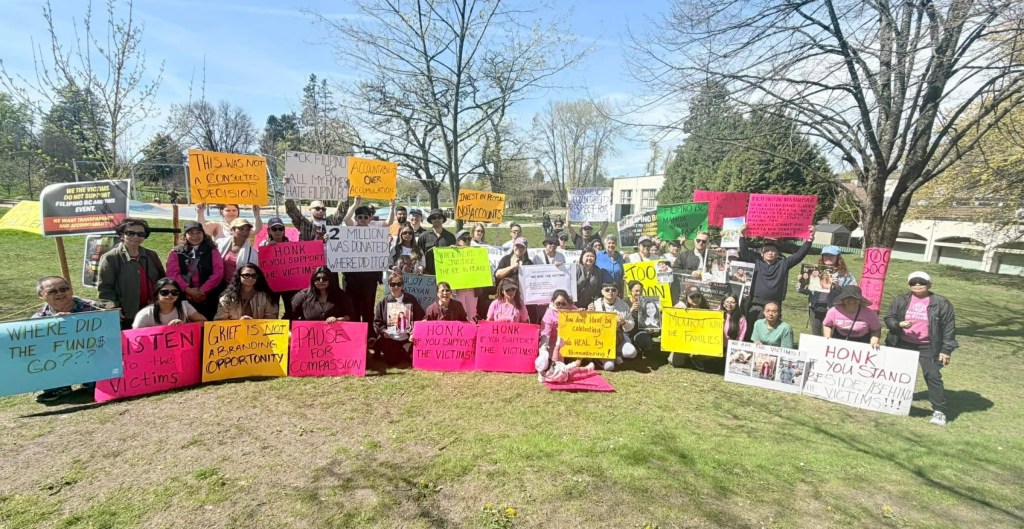
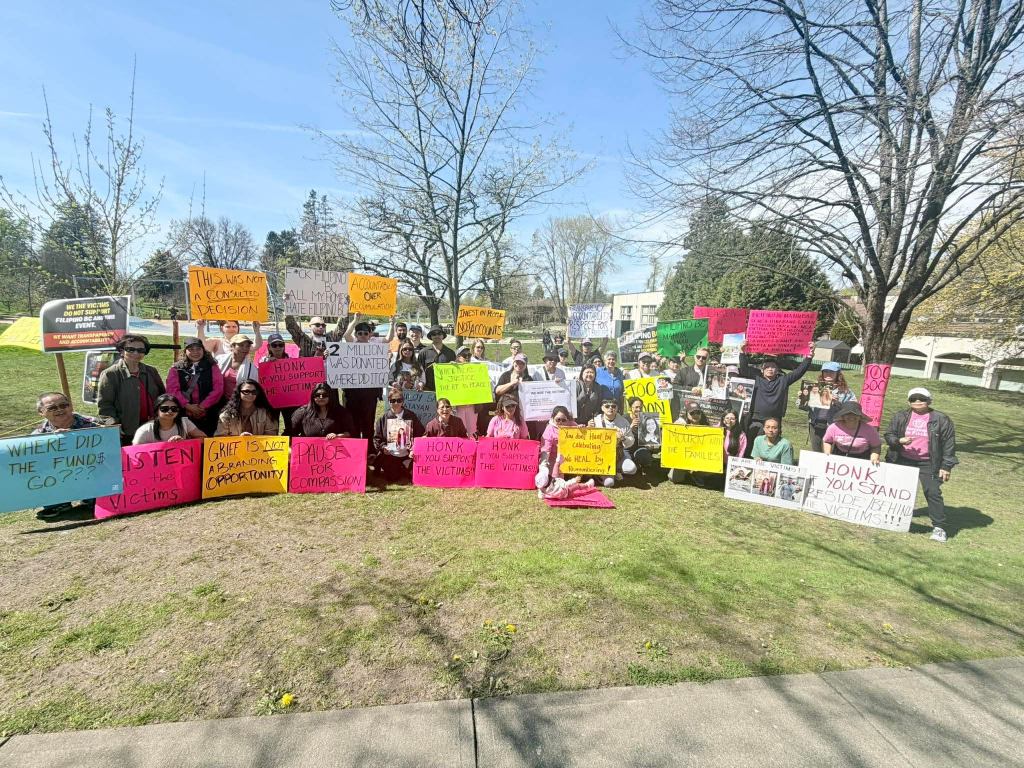
Outside the barricades, victims’ families and supporters gathered to voice concerns, calling for transparency and accountability in relation to donated funds. Importantly, those outside the barricades were not simply general protesters. They included individuals most directly impacted by the tragedy—families who lost loved ones, those who were injured, individuals who were displaced, and others now living with life-altering consequences.
It is also important to acknowledge that the April 26 tragedy affected the broader Vancouver community, particularly the Filipino community as a whole. The grief was collective. However, the impact was not equal.
What emerged was not simply a division in perspective, but a misalignment in how healing was being expressed and experienced. Grief was shared across the community, but the way it needed to be held was not the same for everyone.
Some held placards encouraging passing drivers to show support, resulting in visible waves of honking and public acknowledgment from the broader community.
At the same time, bystanders—including members of the public—stopped to listen and offer support. Some first responders and emergency personnel on site also engaged directly with families in informal, human moments of care and conversation. These interactions were described by some present as deeply meaningful and grounded in empathy.
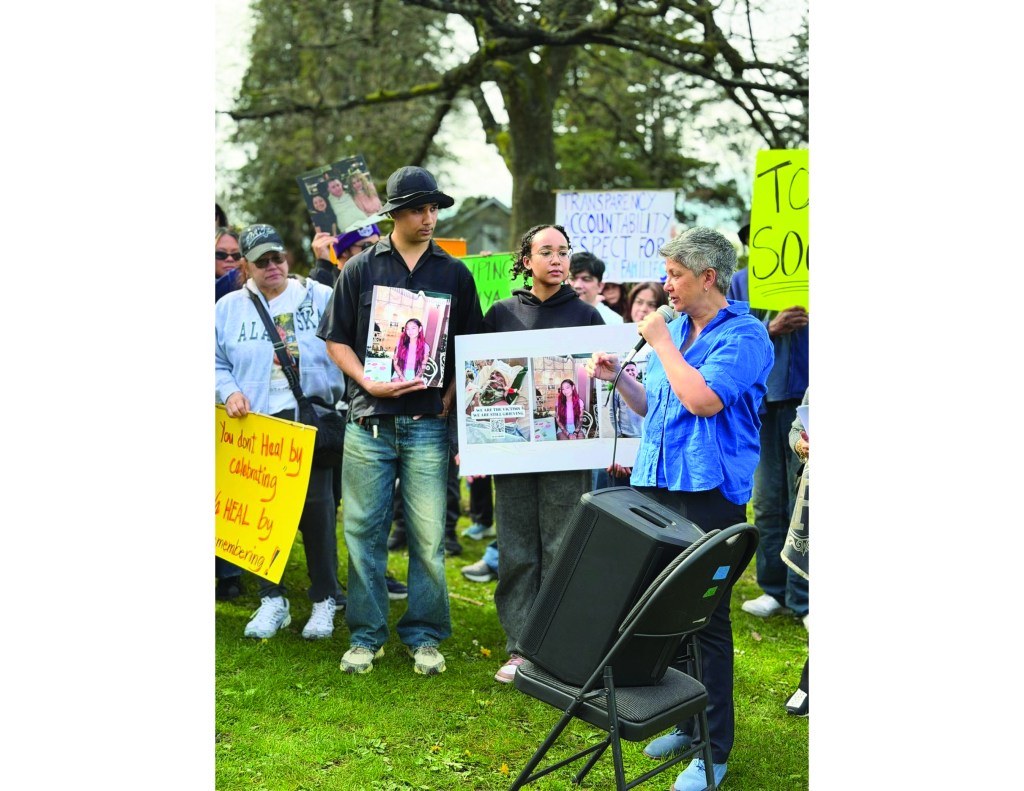
Among those present throughout was MLA Mable Elmore, who remained with victims and families for an extended period. Those present expressed appreciation for her consistent presence and attentiveness, noting that she took time to listen and help ensure the space remained respectful and grounded.
Sandra Gumboc, an organizer with Vancouver Maisug, also addressed those gathered outside, voicing concerns about what she described as a disconnect between public messaging and the lived experiences of victims and families. Her remarks reflected a sentiment shared by others: that meaningful healing requires inclusion and accountability, not only public statements.
Meanwhile, several elected officials delivered remarks from the stage expressing solidarity with the community and those affected. However, according to those gathered outside, there was limited direct engagement from most officials with victims and families present beyond the formal program setting.
This parallel experience—formal messaging inside the venue and direct calls for accountability outside—underscored a visible divide in how the day was experienced.
Two realities unfolded at once:
Inside the event: messages of remembrance, unity, and support
Outside the perimeter: calls for transparency, inclusion, and accountability
For many, this contrast became the defining feature of the day.
The core issue raised by some community members is not opposition to remembrance or gathering, but the question of how healing is defined and who gets to shape it. Healing, for many, cannot be delivered as a message from a stage. It must be built through trust, listening, and meaningful engagement with those most affected.


Leave a Reply