



By Joe Larano Jr.
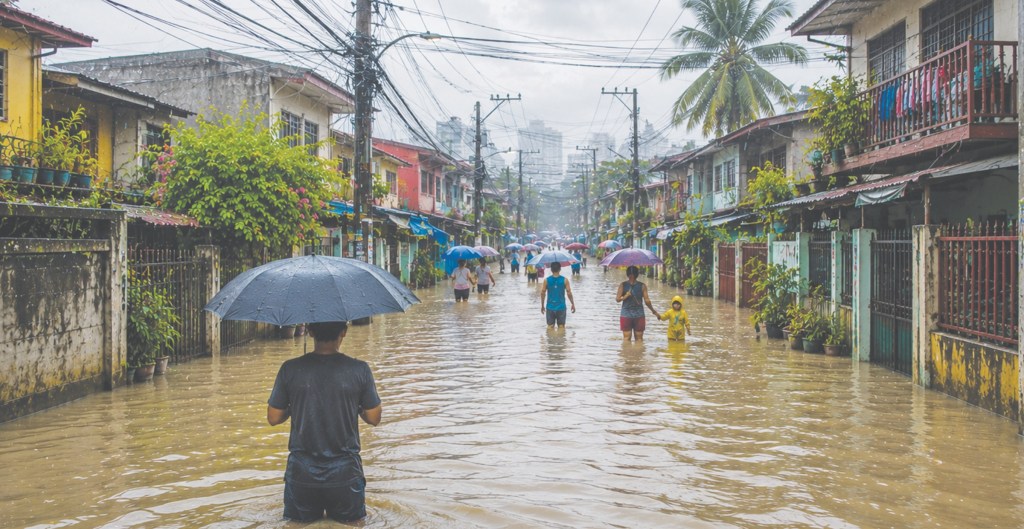
For the past week, Jun Nazareno had been going to work in Abbotsford with his body in the factory and his mind somewhere across the Pacific. He worked as an industrial machine operator in a manufacturing plant, a job that required concentration and precision. But lately, every vibration of the machinery seemed to remind him of something else. His phone was always in his pocket, and during every break he would check it for messages from Manila. A typhoon had brought days of relentless rain, flooding streets and forcing families to move their belongings to higher places. His wife sent short messages whenever the internet returned. The water is already inside the house. Hours later came another: Don’t worry. We’re okay for now. It was the last sentence that worried Jun the most.
Jun had been in British Columbia for four years. Like many Filipino immigrants, he had come to Canada with the promise of building a better future for his family. Every payday, a portion of his earnings went home. He had become good at dividing his salary before it even reached his bank account: rent, groceries, transportation, savings and remittance. Whatever remained was for himself. His wife and two children were still in Manila, waiting for the day when circumstances would allow them to be together in Canada. Until then, Jun had learned to measure distance not in kilometers, but in missed birthdays, video calls and the number of times he said, Soon, we will be together. The typhoon made that distance unbearable.
One evening, Jun received a message from his twelve-year-old daughter. Papa, the rain won’t stop. A photograph followed. The street near their house had disappeared beneath brown floodwater. His wife had placed appliances on chairs and tables. Important documents were sealed in plastic bags. His elderly mother, who lived nearby, had been moved to a relative’s second floor. Jun stared at the photograph for a long time. He wanted to leave work, buy a ticket and fly home immediately. But he knew he could not simply walk away from his job and the life he had built in Canada. For the first time, he felt the painful contradiction of being an overseas Filipino worker. He had left home to protect his family, yet when they were in danger, distance made him feel helpless. That night, he called home. The connection kept breaking, but his wife finally said, “Jun, you are not abandoning us. You are there because you are taking care of us.” The words stayed with him.
The next morning, Jun contacted relatives, sent what money he could and arranged for additional help. At the factory, his Filipino co-workers noticed that something was wrong. Without asking many questions, they quietly collected money among themselves. One brought groceries for Jun. Another offered to drive him home after work. Someone simply said, “If you need anything, just call.” Back in Manila, the family also found help. Neighbors shared food, checked on elderly residents and helped one another move belongings to safer places. By the end of the week, the rain weakened and the floodwaters slowly receded. The damage was painful, but Jun’s family was safe. His daughter sent him another photograph. This time she was standing outside the house holding a broom, with her mother beside her. The caption read, We are cleaning, Papa. Jun looked at the photograph and smiled through tired eyes. It reminded him that Filipinos have always known how to face difficult days. We may bend under the weight of hardship, but somehow, we find the strength to stand together.
On Monday morning, Jun returned to the factory. The machines were running again. He put on his safety equipment, checked his station and began his shift. Nothing around him had changed, yet something inside him had. During his break, he looked at his phone. There was another message from his daughter: Papa, the sun is out today. Four simple words, but they felt like a blessing. Jun looked through the factory window at the pale Abbotsford sky. He knew there would be other storms, other typhoons and other moments when being far from home would hurt. But he also understood that being far away did not mean being powerless. Every dollar sent home, every call made, every sacrifice endured and every helping hand extended to another Filipino was a thread connecting families across oceans. We may live on different shores, but we carry home with us. And whenever the storms come, we remind one another that no Filipino should have to face the rain alone.





Leave a Reply