



By Pat Parungao
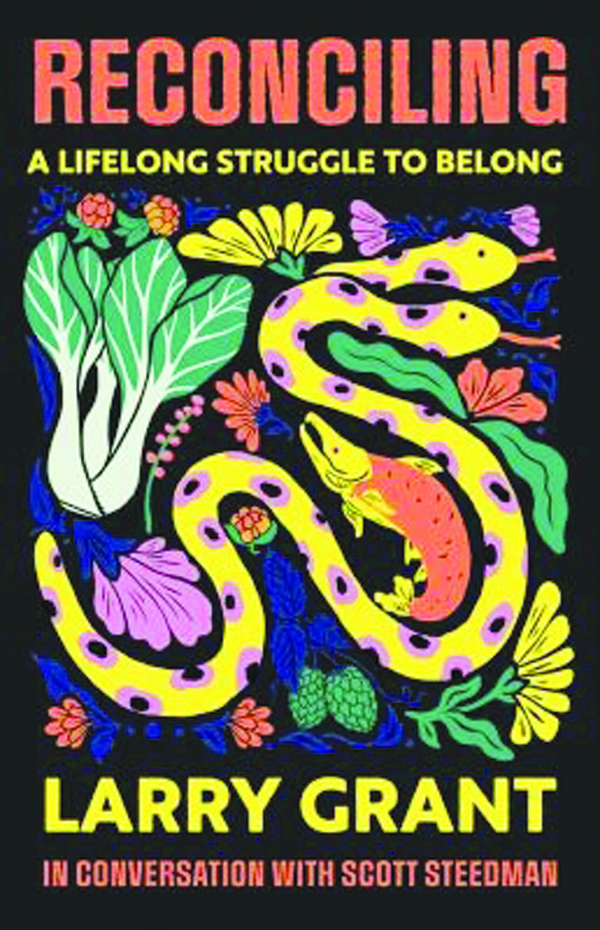
Front cover of Reconciling: A Lifelong Struggle to Belong
It was a pleasure to attend a book launch / conversation between Musqueam Elder Larry Grant and co-author Scott Steedman to celebrate Reconciling: A Lifelong Struggle to Belong. Moderator Sarah Ling’s introduction, referring to this book as “a must read for all Canadians” really caught my attention, and increased my interest to read this well-written book.
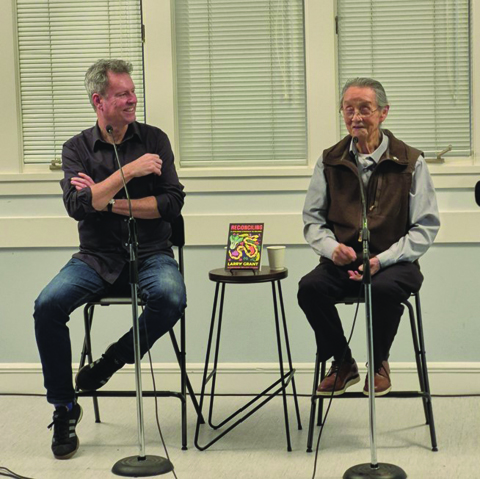
Scott Steedman and Larry Grant. Burnaby. Dec. 7, 2025. Credit: Pat Parungao
Scott sensitively guided the conversation as Larry reflected on his lifelong struggle for belonging. Often, due to his mixed-race ancestry, racist government policies and public sentiments, he searched for his place of belonging. Now at 89 years old, he is recognized as a respected Elder of the Vancouver Chinese Community and the Musqueam Indian Band. Larry began by introducing his hən̓q̓əmin̓əm̓ name sʔəyəɬəq (suh-yuh-shl-uck), and his Cantonese name 洪禮興(Hong Lai Hing).
In 1936, Agnes Grant – Larry’s mother and family lived in Musqueam and did seasonal work as farm workers in Agassiz picking hops (a key ingredient in brewing beer). That year, Larry was born prematurely in the farm outhouse and was so small that his first bed was a shoebox.
Although Larry and his siblings were registered with the Department of Indian Affairs, their status was abruptly taken away when the local Indian agent learned that their mother, Agnes Grant, had married Hong Tim Hing – a non-status man. He stripped her of her “Indian” status and despite the family’s deep roots in Musqueam territory, Larry and his siblings were reclassified and cruelly recorded as “the bastard children of Agnes Grant,” erasing their identities as Musqueam.
At the same time, being part-Chinese didn’t offer social advantage except that that they did not get sent to residential school. Larry’s father arrived in Canada in 1920, a time when Chinese people were denied citizenship, and anti-Asian racism was entrenched in law and everyday life. Larry was traumatized and asked himself questions like “Why am I different?” “How am I different from my cousins?”
In Chinatown he was judged for not speaking Chinese. White media propaganda reinforced harmful stereotypes of slant-eyed Asians and that white guys, e.g., the cowboys, were always the hero … not the Indians. Larry sought self-identity. His image of himself included not wanting to be who he was.
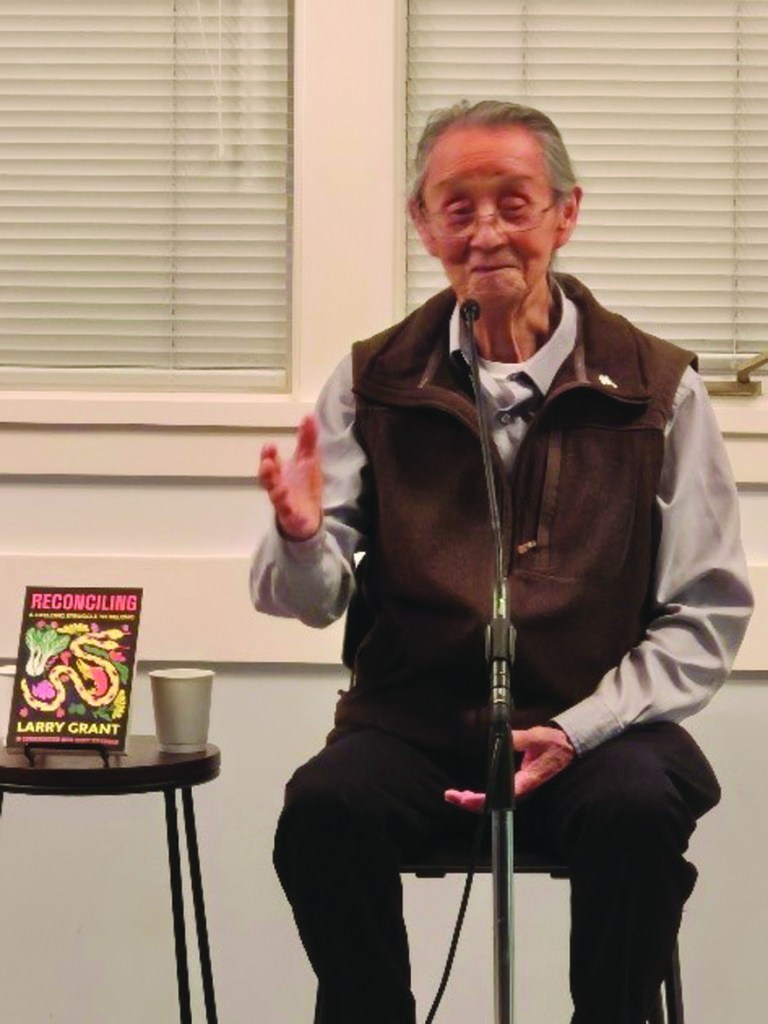
Elder Larry Grant. Burnaby. Dec. 7, 2025
After graduating from Vancouver Technical Secondary School, Larry trained as a heavy-duty mechanic. When he was told that he would need to go to Prince George or Kitimat to find work, he felt fear of travelling so far from home. He thought about the bravery of his father who, in 1920 at age 14, came to Canada – a country that rejected Chinese people, culture and language. Larry went on to work as a heavy-duty mechanic, then as a long shoreman, retiring at age 62.
Urged by his younger brother, Larry then began studying hən̓q̓əmin̓əm̓ at UBC, marking the beginning of his central role in Musqueam’s language revitalization. He went on to co-teach the introductory hən̓q̓əmin̓əm̓ course, and since 2001, has served as an adjunct professor with UBC’s First Nations and Endangered Languages Program. He is also Elder-in-Residence at the First Nations House of Learning and Consultant for the Musqueam Language and Culture Department.
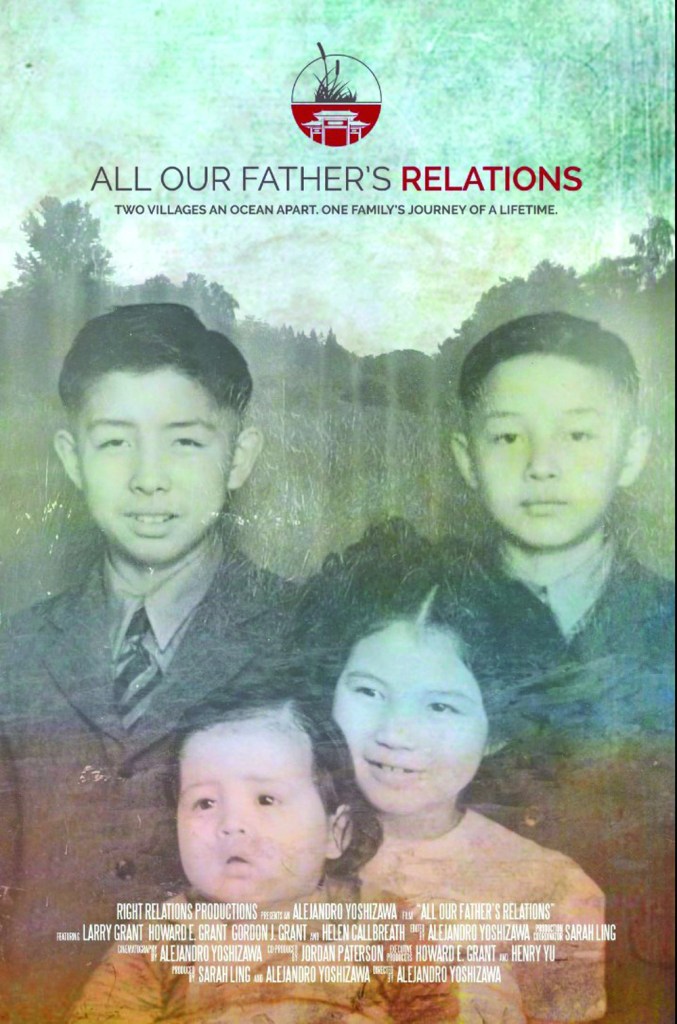
All Our Father’s Relations
When, at age 77 he learned that his ancestral village in Guangdong China was about to be destroyed, he planned a trip to go there with his siblings and others. As a child he was afraid that his dad would take the family to China and leave them there, and afraid of not being permitted to return to Canada yet going there as an adult resulted in a profound sense of belonging. As he and his family walked through the main entry gate, he imagined his dad growing up there and was filled with the feeling of “I’m home.” “This is our family home.” This intercontinental family reunion was recorded and made into a documentary called All Our Father’s Relations.
Larry encouraged all of us to visit the place of our ancestors and walk in their footsteps, regardless of where this is. By doing this, we can transform our outlook and deepen our understanding of why our ancestors came to Canada.

 ReyFort Media
Leave a comment