



By Joe Larano Jr.
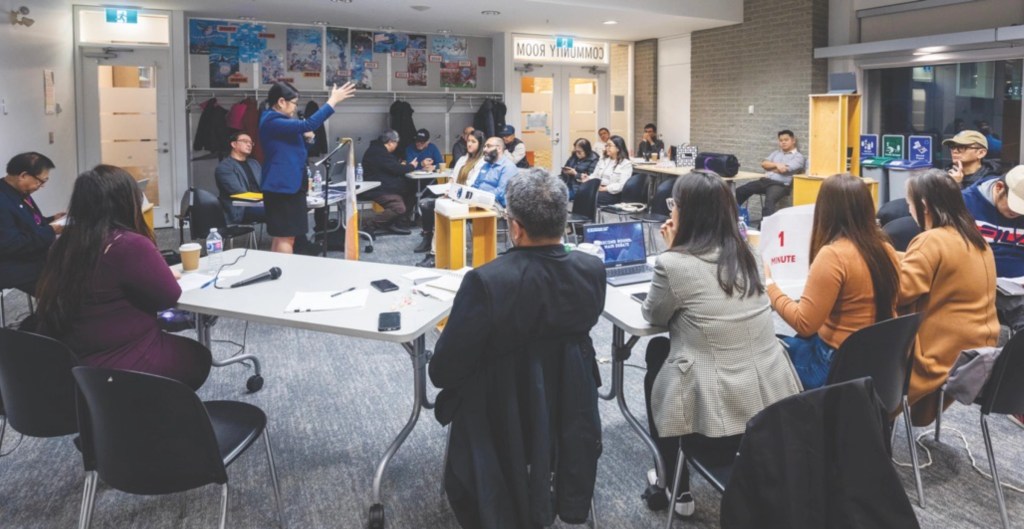
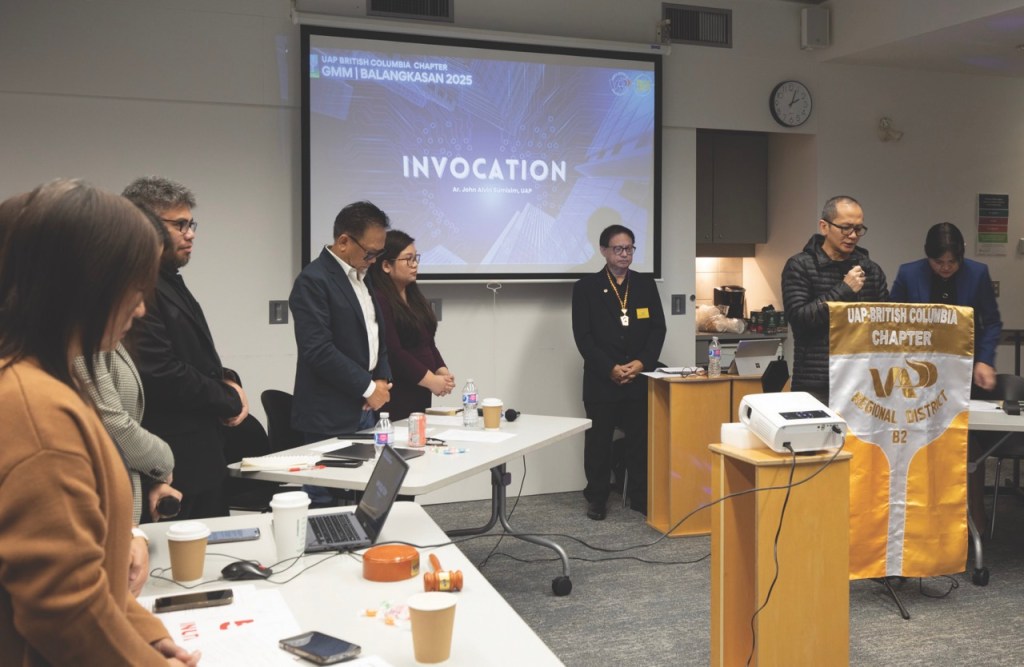
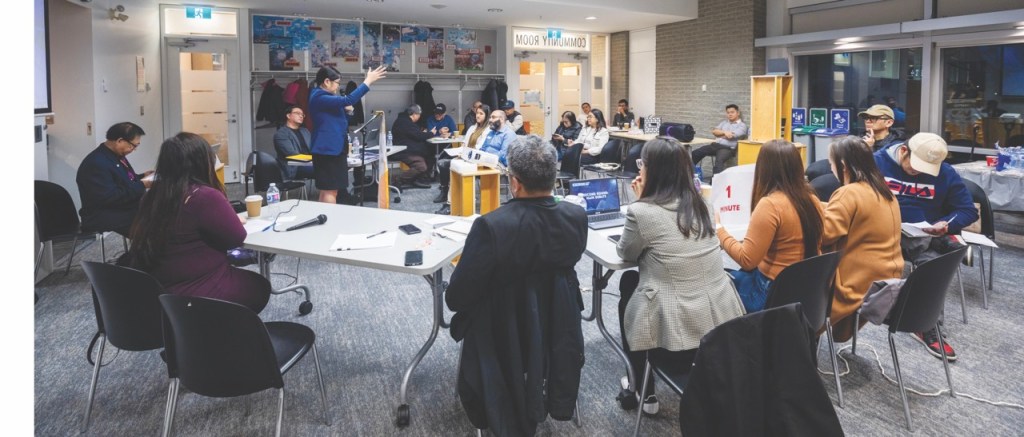
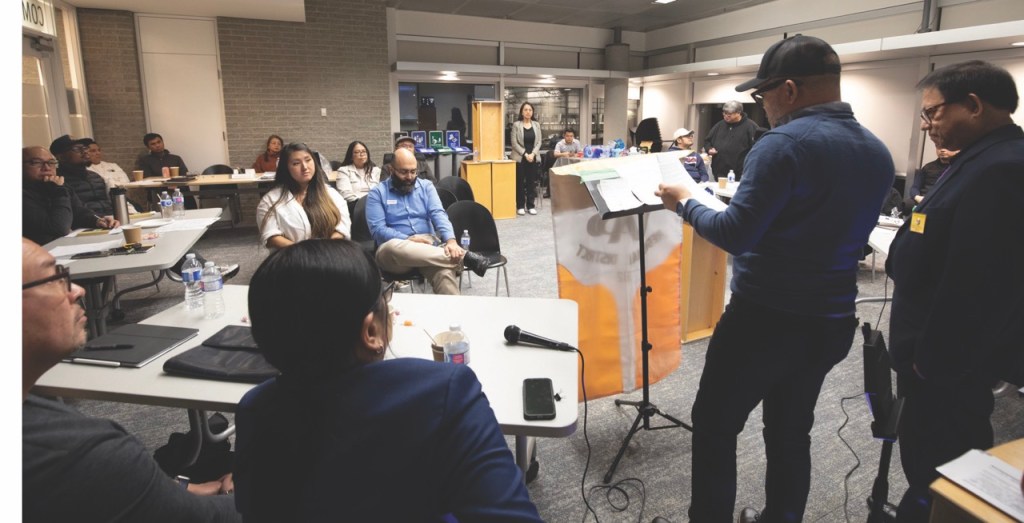
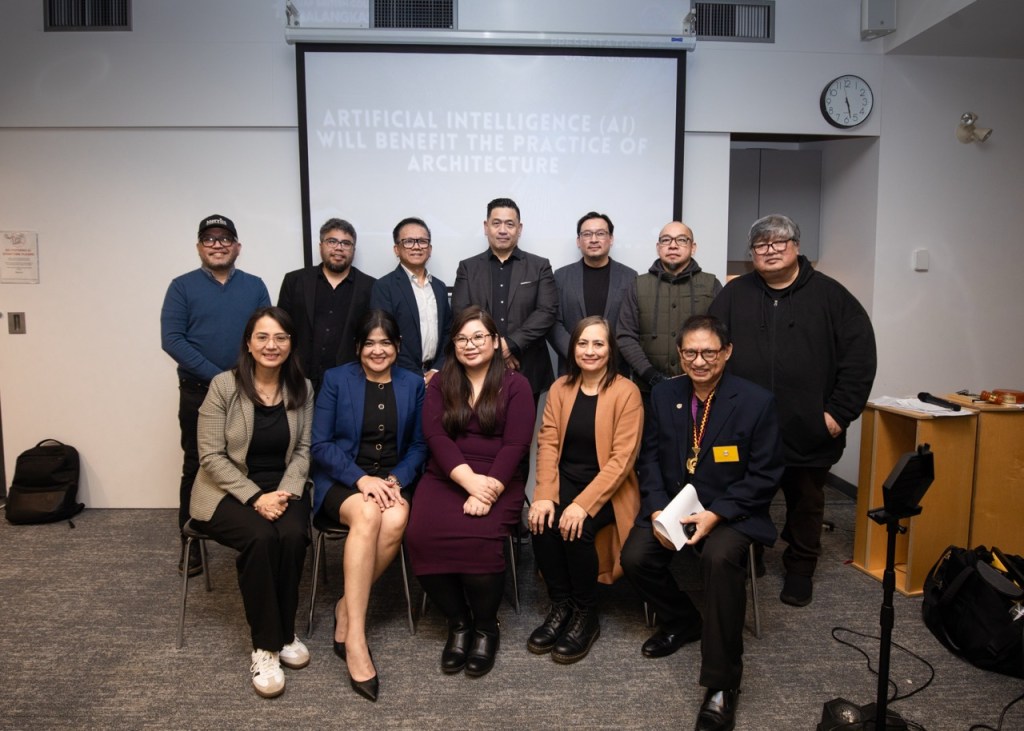
The United Architects of the Philippines – British Columbia Chapter (UAP–BC) conducted a well-attended Balangkasan on November 22, 2025, at the McGill Library in Burnaby, bringing together architects, allied professionals, and Filipino-Canadian community members to discuss a major issue facing the profession today: the impact of artificial intelligence on architectural practice. With the motion, “Artificial Intelligence (AI) Benefits the Practice of Architecture,” the event reaffirmed the chapter’s commitment to understanding how emerging technologies are reshaping design and construction.
Balangkasan, a classical Filipino debate format, has been revived by UAP–BC as a venue for organized, well-informed discussions on matters affecting architects. The format provides structured exchanges where experts present opposing views, allowing members to form reasoned conclusions that culminate in a collective resolution representing the chapter’s stance.
Moderator Architect Joe Larano Jr. opened the forum by emphasizing that AI is already influencing daily workflows in firms around the world. He noted that architects now routinely encounter AI systems that generate conceptual layouts, automate rendering processes, analyze climate data, and enhance project management. The central question before the house, he stressed, was whether these technologies uplift the profession or pose risks to the architect’s creative and ethical responsibilities.
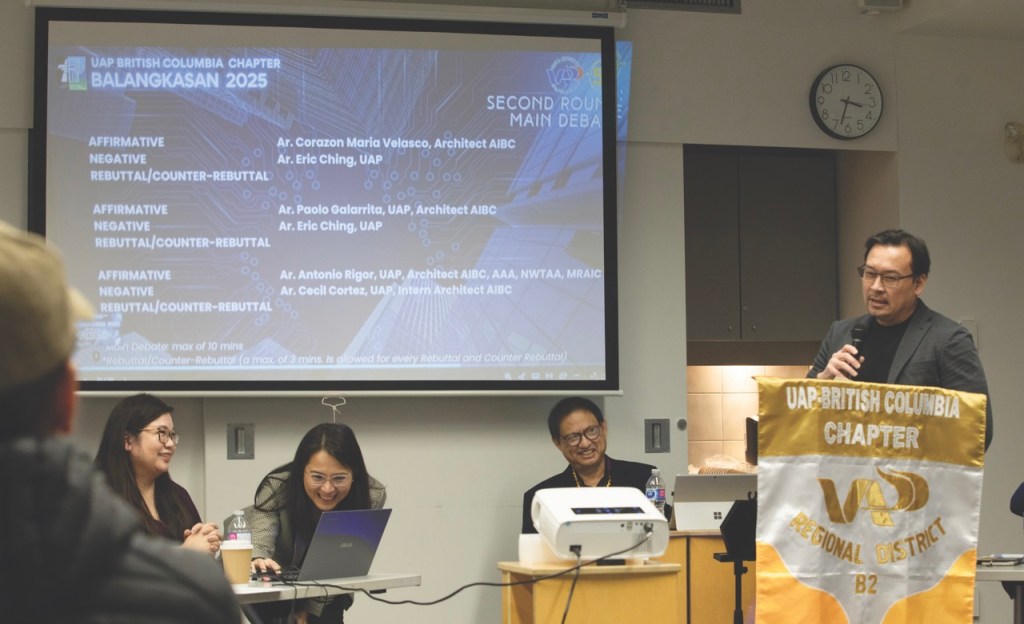
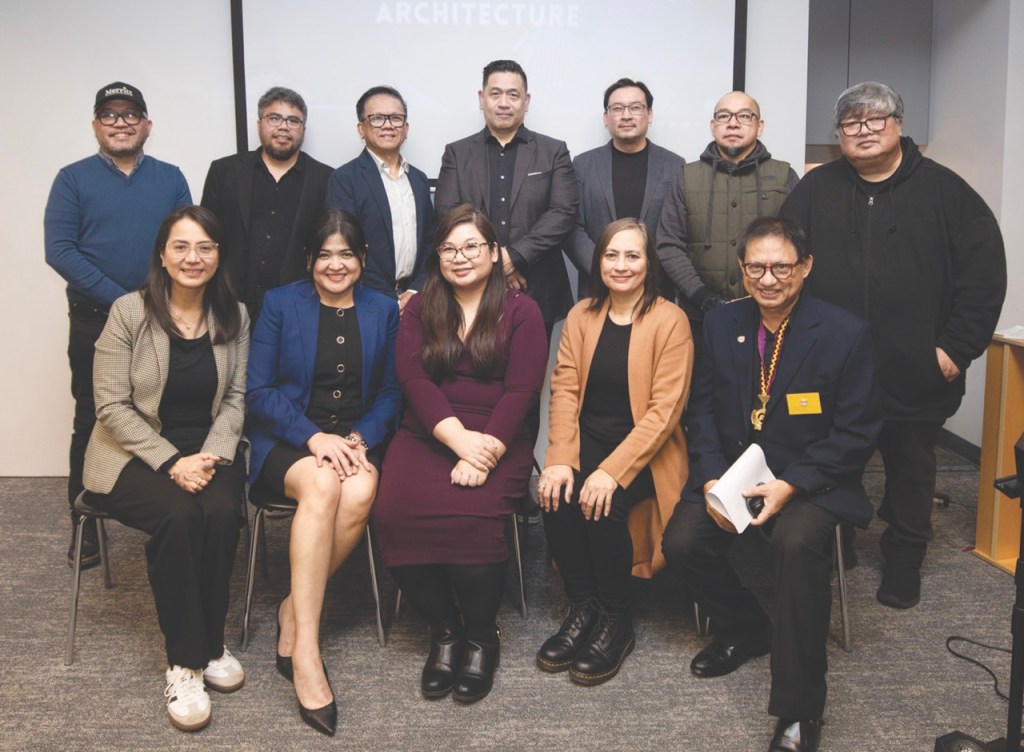
The Affirmative team—Architects Antonio Edwin Rigor, Corazon Maria Velasco, and Paolo Galarrita—advocated for AI as a natural progression of the tools that have long supported design practice. They pointed out that, much like the introduction of CAD and BIM, AI enhances efficiency, accuracy, and design exploration. They highlighted AI’s role in processing vast datasets quickly, generating numerous design alternatives, assisting in environmental and sustainability assessments, and relieving architects of repetitive tasks. With these advantages, they argued, architects gain more bandwidth for creativity, innovation, and meaningful client engagement.
Opposing them were Karen San Pedro, Eric Ching, and Sonny Cortez, who underscored the potential risks AI introduces. They stressed that architecture is grounded in human judgment, cultural sensitivity, and an understanding of context—qualities digital systems cannot replicate. They raised concerns about over-dependence on automated outputs, possible erosion of design originality, and the ethical challenges tied to data usage. The Negative team argued that while AI may support practice, it must not diminish the architect’s essential role in shaping spaces responsibly and thoughtfully.
The exchange between both sides was articulate and substantive, reflecting thorough preparation and deep familiarity with the topic. Serving as Reactor, Gaylord Dela Cruz synthesized the principal arguments and linked them to practical concerns within the profession. Rapporteur Guel Climacosa formally recorded the proceedings. Through organized presentations and rebuttals, attendees gained a balanced view of AI’s opportunities and challenges.
Following the debate, the audience participated in a Post-Debate Vote to determine the collective position of the chapter. A decisive majority supported the Affirmative motion, concluding that AI, when ethically and responsibly integrated, offers tangible benefits to architectural practice. As the vote surpassed the required threshold, the chapter adopted the Affirmative position as its official policy and advocacy direction.
A formal Resolution documenting this stance will be forwarded to the UAP National Headquarters. It will outline UAP–BC’s support for AI as a strategic tool for professional advancement, while emphasizing the need for continued education, responsible application, and ethical safeguards.
The Balangkasan’s success reaffirmed UAP–BC’s dedication to constructive dialogue, professional growth, and leadership within the Filipino architectural community in British Columbia. By engaging with issues at the forefront of global practice, the chapter continues to strengthen its role as a platform for informed discourse and collective progress.




 ReyFort Media
Leave a comment