



By Joe Larano Jr.
We came to British Columbia almost three decades ago as a family searching for a new beginning. Before arriving here, we lived in Bahrain, a small island in the Arabian Gulf. It was so small that it often felt as if every Filipino there was familiar, either by face or by name. Filipinos have always been closely connected to one another when living in foreign lands. Our longing for home naturally leads us to look for familiar faces and familiar ways. In that little island, we survived and stayed rooted in our heritage because we had a small Filipino club that served as our cultural refuge. It was not grand, but it gave us a place to celebrate who we were. That simple gathering place helped us raise our children with the language, values, and stories of home.
With that experience still fresh in our hearts, we landed in British Columbia with three young boys aged ten, seven, and two. I believed their ages were ideal, not only for embracing Canadian values but also for holding on to the Filipino culture they had lived in Bahrain and in our home. Our youngest son, only two when we arrived, had the most fragile connection to his Filipino roots, and we hoped a cultural environment here would help strengthen it.
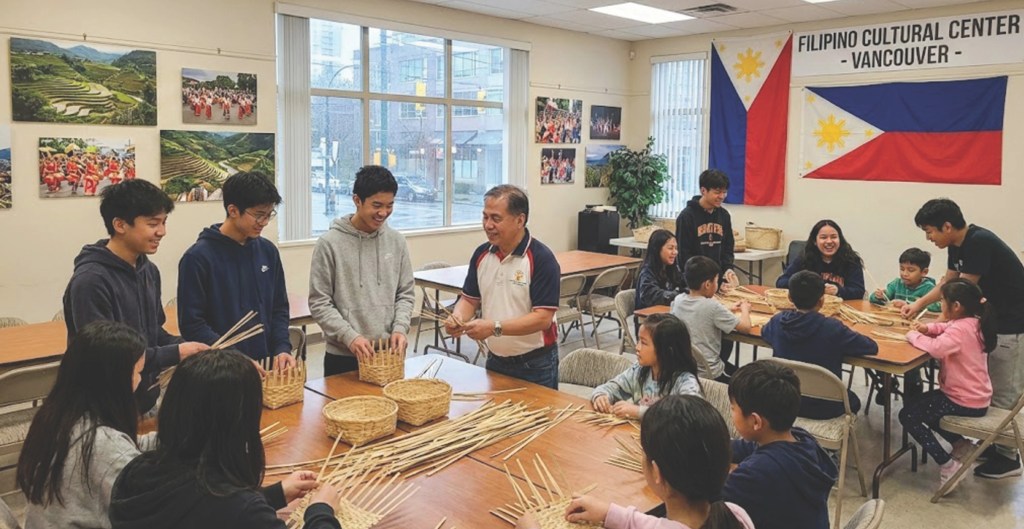
We were optimistic that in this beautiful and diverse province, we would find a place that offered the warmth and familiarity of Philippine culture. We imagined a Filipino cultural center or a gathering space where Filipino families could come together, where children could meet other Filipino children, and where the stories of our culture could be shared naturally. A place where one could hear the language spoken, learn the dances, talk about our heroes, and celebrate the traditions that help define our identity.
But when we arrived, we found none.
There was no Filipino cultural center. Not even a small hub or building that could serve as a home for our arts, history, and heritage. There were many Filipino organizations at the time, each with its own programs for newcomers, but none that addressed the deeper need for cultural continuity. There was no edifice where regular cultural or heritage activities, or any structured cultural programs, could be taught to our children. What made it even sadder was the disunity that marked the community back then. Groups worked separately and sometimes in competition rather than in collaboration. In that atmosphere, my hope of seeing my children grow alongside other Filipino children, learning the culture in a communal and meaningful way, slowly faded.
Parents can teach values and culture at home, but a cultural center can offer something more. It offers a place where culture is lived, not just spoken about. When children hear other children sing Filipino songs, or listen to stories about our heroes from someone other than their parents, or learn about the Philippine Eagle in a room filled with equally curious young minds, the experience becomes unforgettable. It becomes part of who they are.
The disunity among Filipinos in the past must finally give way to something that serves a greater purpose. We owe it to our children and to the generations that will come after them. We must find a shared ground where we can work together. The dream of having a cultural center cannot continue to be a dream pushed forward from one decade to another.
Today, after twenty seven years in this province, that long dream is still unfulfilled. Once again, disunity and misunderstanding among community leaders appear to be creeping back into our midst. I am now retired, and it saddens me to think that I may never see or step inside a Filipino cultural center in Vancouver. Two of my sons are now married and fully grown. They matured without ever experiencing what it is like to set foot in a Filipino cultural home, one that could have strengthened their cultural identity. My youngest, now an adult, still does not fully grasp that Lupang Hinirang is the title of the Philippine National Anthem. There is a quiet pain in knowing this. It feels as if part of our heritage simply slipped through the cracks.
Yet the dream continues, no longer for me, but for Filipino families arriving today and for the children who will grow up here. They deserve a cultural home that will keep them connected to their roots. They deserve a space where being Filipino is practiced openly and proudly.
It is time for us to come together and build what has been missing for so long. If we unite with sincerity and purpose, that elusive Filipino Cultural Center will no longer remain out of reach. It can finally become the home our future generations deserve. (Contact: jblarano@gmail.com)


 ReyFort Media
Leave a comment