



Posted by ReyFort Media
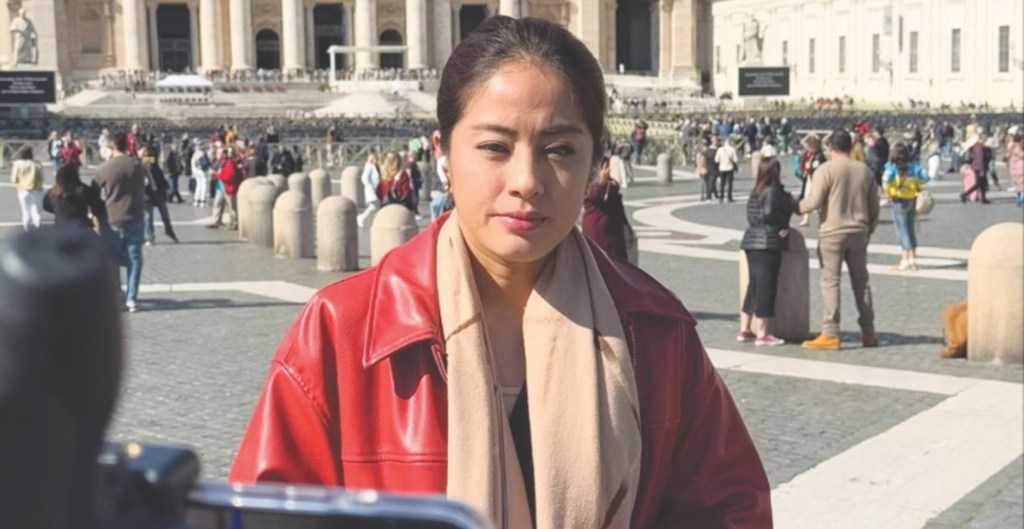
Broadcaster Gretchen Ho raised more questions after a family member’s experience with a money exchange service in Norway, which she reported to the Philippine ambassador to Norway.
The TV personality earlier shared that a family member was denied the opportunity to exchange $300 in US dollars to Norwegian Krone at Oslo Airport in Gardermoen.
According to Gretchen, the staff cited “corruption and money laundering in the Philippines” as the reason.
She added that her family member was told to exchange their money elsewhere instead.
Other Filipinos shared similar experiences of being denied the opportunity to exchange money, with some saying they were told that the Philippines is considered a “high-risk country” for money counterfeiting.
A Filipino based in Oslo confirmed Gretchen’s story and commented that US dollars from Filipinos cannot be exchanged “due to the strict anti-money laundering rules that they follow, ordered by the EU and NATO.”
EU stands for the European Union, while NATO refers to the North Atlantic Treaty Organization.
The Filipino added that the policy “does not only apply to the Philippines, but many countries that are considered high-risk places.”
In an update on Tuesday, October 7, Gretchen said that she has “already spoken with the Philippine Ambassador to Norway.”
“He called me up last night after I emailed an official incident report on what happened to my family member at Gardermoen Airport in Oslo. The Ambassador was surprised. As far as he knows, these incidents shouldn’t be happening. He says he’ll be meeting with the Norwegian foreign ministry to address the issue,” she said.
Gretchen said she wanted to seek clarification on the incident, noting that the Philippines had been removed from the “grey list” of the Financial Action Task Force (FATF) as of February 2025.
“In its latest statement, the FATF announced that the Philippines strengthened the effectiveness of its anti-money laundering (AML)/countering the financing of terrorism (CFT) regime to meet the commitments in its action plan regarding the strategic deficiencies that the FATF identified in June 2021,” the Bangko Sentral ng Pilipinas said in February.
The broadcaster said that she wanted to “get some clarity” on the issue, pointing out if “there is a new policy, given recent events, or just a failure to update and disseminate information.”
“I believe getting some clarity would help not just our family, but other Filipinos who have shared similar experiences at the same airport in Oslo, saying they have been declined foreign exchange services upon knowing their country of origin is the Philippines,” Gretchen said.
“So are we back on the ‘high-risk’ list for money laundering? Or is this an overeager clerk who was simply not updated on the grey list?” she asked.
The broadcaster also listed some facts about the case, including the country’s removal from the FATF “Grey List.”
“After nearly 4 [four] years of being on the grey list, the Philippine government welcomed the move, saying this would ‘facilitate faster and lowercost cross-border transactions, reduce compliance barriers, and enhance financial transparency,’” she said, citing a report from the Palace.
“The FATF is an intergovernmental body established by G7 countries aiming to set global standards in combating money laundering, terrorist financing and proliferation financing,” Gretchen added.
She then raised several questions related to her family member’s experience, as well as those of other Filipinos who reported similar encounters.
“Have recent events influenced our status at the FATF? Are we back on the ‘high-risk’ list for money laundering and dirty money?” the broadcaster asked, alluding to reports of alleged corruption involving the country’s flood control projects.
“If not, is it a matter of the financial institution’s internal policy not to provide services for anyone coming from the Philippines? Why?” Gretchen added.
“The amount that my family member tried to exchange at the Oslo Gardermoen Airport was a mere 300 USD [US Dollars], but I was told that the lady on the counter didn’t even look at the money anymore,” she said.
“How will this influence our future travels? Waiting for some answers from the Philippine Embassy,” the broadcaster concluded.
Her post drew reactions from several Filipinos, with some commenting that the incident was “shameful” in light of recent reports about kickback schemes allegedly involving government officials in flood control projects.
The scheme reportedly involves some lawmakers and government contractors as well.
“Nakakahiya ang bansa natin dahil sa mga kawatan,” a Facebook user wrote.
“May not be in the official list, but perception of other nationality matters as well,” another commented.
“O ‘di ba, nakakahiyang maging Pilipino sa panahon ngayon,” a different online user wrote.
“Nakakahiya, Pinas. Dahil sa government, affected pati citizens,” another Pinoy said.
Reports have recently dominated the news alleging that some government officials, including former House Speaker Martin Romualdez and former Ako Bicol party-list representative Zaldy Co, Senators Chiz Escudero, Jinggoy Estrada and Joel Villanueva, among others, were involved in kickback schemes tied to flood control projects.
There have also been testimonies of millions of cash being delivered to the residences of some officials as part of their share from the scheme.
The government has since formed an Independent Commission for Infrastructure (ICI) to probe the alleged anomaly involving flood control projects in the country.
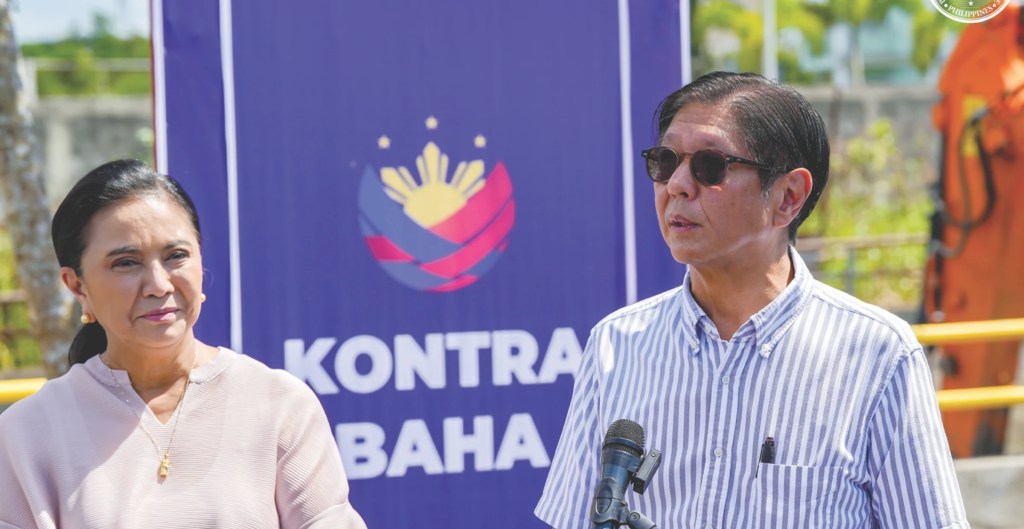
President Ferdinand Marcos Jr. announced that the government has realigned the P255.5 billion originally allocated for the Department of Public Works and Highways’ 2026 flood control budget to critical social and infrastructure services. (J. Malasig/ Interkasyon)
 ReyFort Media
Leave a comment