



By Bella Balisi-Bevilacqua

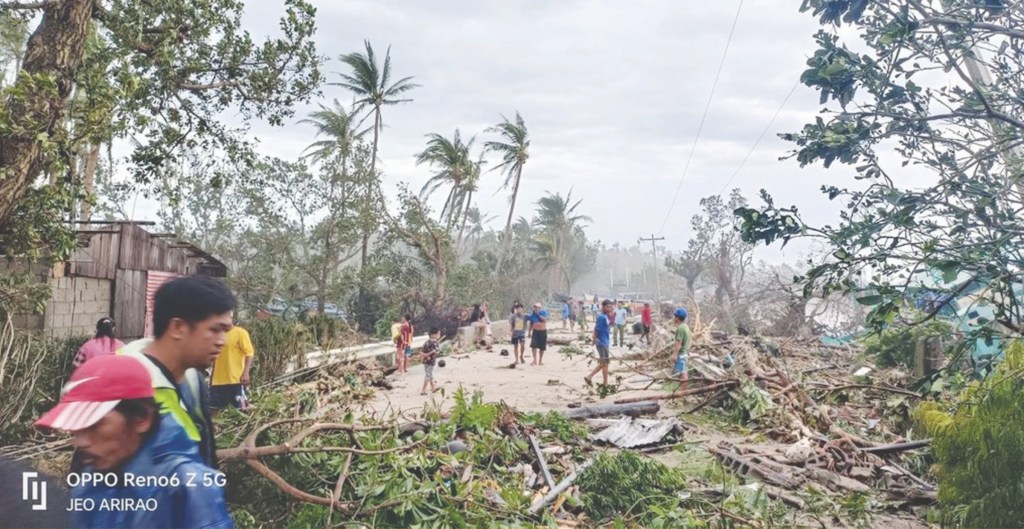
Burnaby, BC, Canada, 23 September 2025 – The Philippine rice farmer today stands at the intersection of three converging crises: climate catastrophe, market collapse, and institutional corruption. Super Typhoon Ragasa—known locally as Nando—did not merely flatten homes and displace thousands; it drowned the fragile hopes of farmers whose livelihoods were already eroded by unfair trade and policy neglect. Fields that should have yielded sustenance became waterlogged graves for palay, and with farmgate prices plunging to as low as ₱8 per kilo, many cultivators now face the bitter irony of producing food that no one will buy.
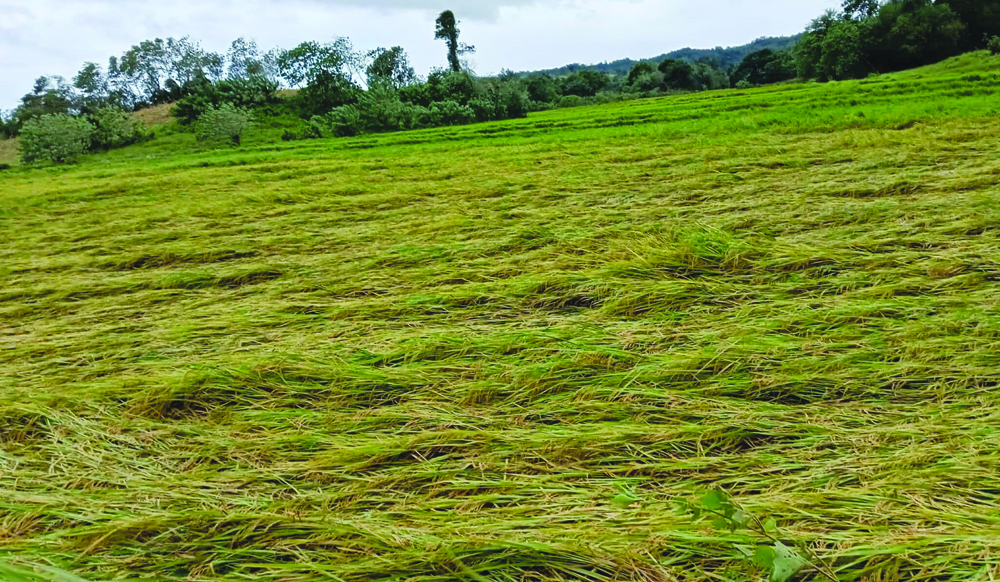
This photo is straight from the horse’s mouth. My sister-in-law forwarded this to me while my whole farming family in Cagayan, Philippines, watched Typhoon Ragasa/Nando ravage through our rice farms. (Photo by Alma Balisi.)
For a farmer whose production costs hover around ₱20-30 per kilo, this is not just unprofitable—it is ruinous. Some have abandoned their harvests to rot, a silent protest against a system that values imported rice more than the sweat of its own people. The tragedy is not only economic but existential: for millions of rural families, farming is not a career choice but an inherited identity. To tell them to “shift livelihoods” is to ask them to amputate their cultural roots.
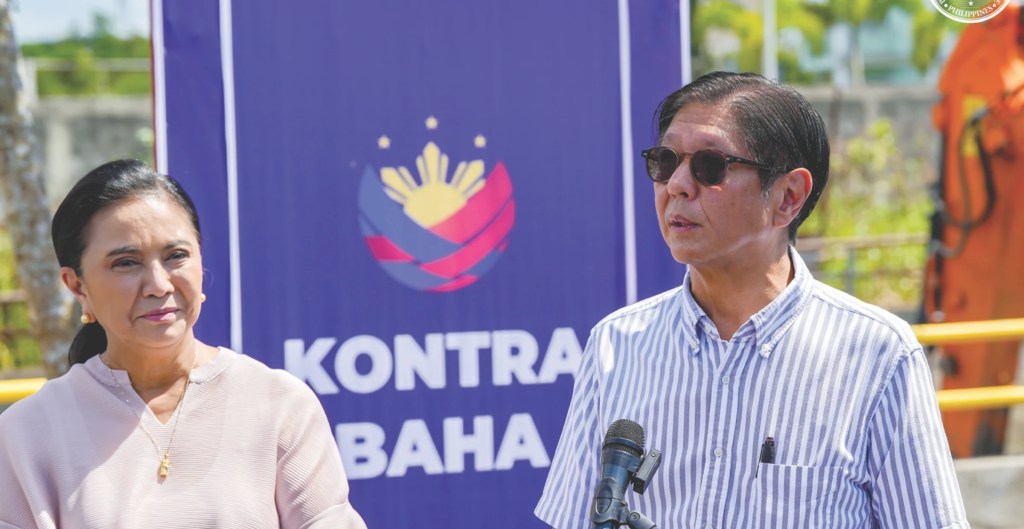
Yet, while farmers drown in debt and despair, billions of pesos meant for flood-control projects—the very infrastructure that could have shielded their fields from Ragasa’s wrath—are now under investigation for massive corruption. Reports of “ghost projects,” substandard dikes, and kickbacks have ignited public outrage. The symbolism is stark: while rivers overflow, so does the greed of officials who siphon funds meant to protect the most vulnerable.
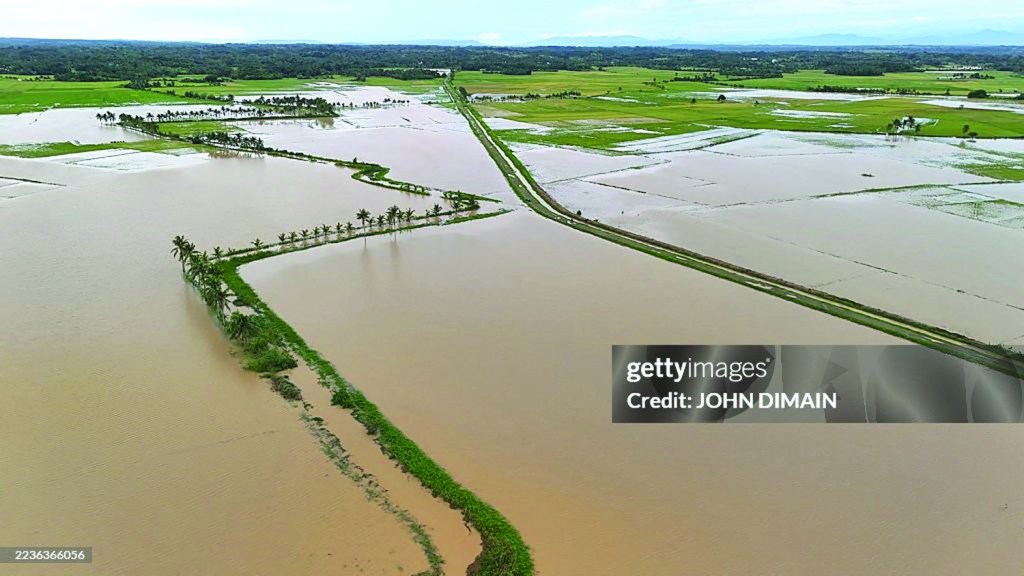
An aerial shot captures submerged rice fields in Calamaniugan, Cagayan, on September 23, 2025, a day after Typhoon Ragasa battered northern Philippines with floods, landslides, and widespread destruction. (Photo by JOHN DIMAIN/AFP via Getty Images.)
The government’s response has been twofold. On one hand, the Department of Agriculture has set ambitious targets for record rice harvests and pledged to modernize post-harvest systems. On the other hand, farmer groups decry the National Food Authority’s limited capacity to buy palay at fair prices, leaving the majority at the mercy of private traders. The rhetoric of food security is loud, but the safety net for farmers remains threadbare.
What, then, must be done? First, the state must institutionalize a floor price for palay that reflects real production costs, ensuring that no farmer sells at a loss. Second, flood-control funds must be insulated from political capture through independent oversight, because every peso stolen from infrastructure is a hectare surrendered to floods. Third, the government must invest not only in mechanization and credit but also in climate resilience—irrigation systems, crop insurance, and disaster-ready storage facilities.
But beyond policy, there is a moral imperative. The Filipino farmer is not a relic of the past but the backbone of national survival. To abandon them to storms, cartels, and corruption is to imperil the nation’s food sovereignty. The typhoon has laid bare the fragility of both our ecosystems and our institutions. The question is whether the government will treat this as a wake-up call or another chapter in the long history of rural neglect.
If the Philippines is to weather both literal and political storms, it must begin by restoring dignity to the hands that plant its rice. Anything less is not just economic mismanagement—it is a betrayal of the very people who feed the nation. (MBB)



 ReyFort Media
Leave a comment