



By Bella Balisi-Bevilacqua
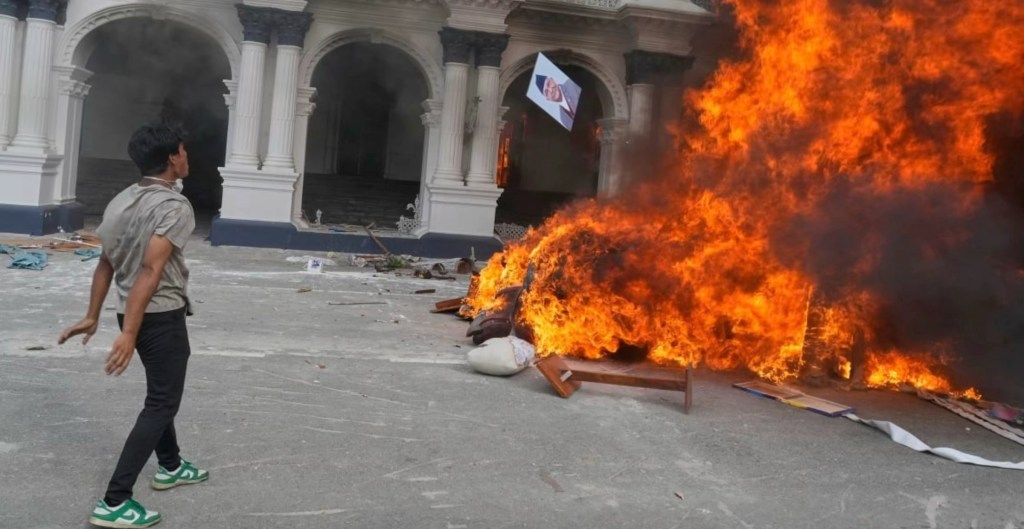
Kathmandu, Nepal, September 10, 2025 – In a dramatic turn of events, Nepal’s Prime Minister Khadga Prasad Sharma Oli resigned Tuesday following two days of violent anti-corruption protests that left at least 19 dead and hundreds injured. The unrest, led largely by Gen Z demonstrators, erupted after the government imposed—and then hastily repealed—a ban on 26 social media platforms. But the digital crackdown was merely the spark that ignited years of pent-up frustration over corruption, nepotism, and economic stagnation.
The protests spiralled into chaos as demonstrators stormed the Parliament, torched government buildings, and attacked the homes of political elites. Among the most harrowing reports was the death of Jhala Nath Khanal’s wife, a former prime minister’s spouse, who was allegedly trapped and killed in a fire set by protesters at their Kathmandu residence. Though unconfirmed, the incident has become a chilling symbol of the fury sweeping the Himalayan nation.
Oli’s resignation came hours after his own residence was attacked, and ministers were evacuated by military helicopters. His departure marks the collapse of Nepal’s 14th government since 2008, underscoring the country’s chronic political instability.
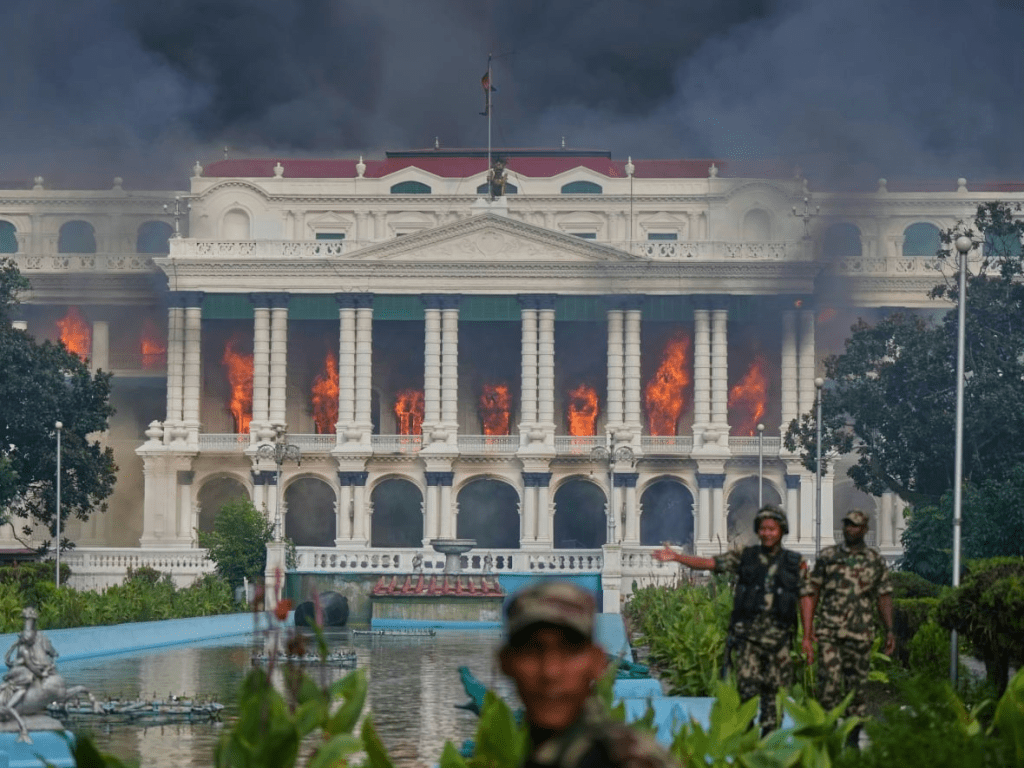
Nepalese military forces attempt to clear demonstrators from Singha Durbar after the government complex was engulfed in flames amid escalating unrest. (Photo by Niranjan Shrestha/The Associated Press from CBC Canada)
Regional Echoes: Indonesia and Malaysia Rise, Philippines Falters
Nepal’s upheaval is not an isolated event. Across Southeast Asia, youth-led movements are challenging entrenched corruption with unprecedented force.
In Indonesia, protests erupted in late August after lawmakers approved lavish housing allowances amid soaring unemployment and inflation. The death of a 21-year-old motorcycle taxi driver, run over by a police vehicle during a demonstration, became a rallying cry. Protesters looted homes of parliamentarians, torched government buildings, and forced the resignation of Finance Minister Sri Mulyani Indrawati. President Prabowo Subianto, under immense pressure, revoked the perks and reshuffled his cabinet.
Malaysia, too, saw thousands rally in Kuala Lumpur against rising living costs and stalled reforms. Prime Minister Anwar Ibrahim faced backlash for pushing a controversial anti-corruption bill through Parliament in just one week, prompting calls for his resignation.
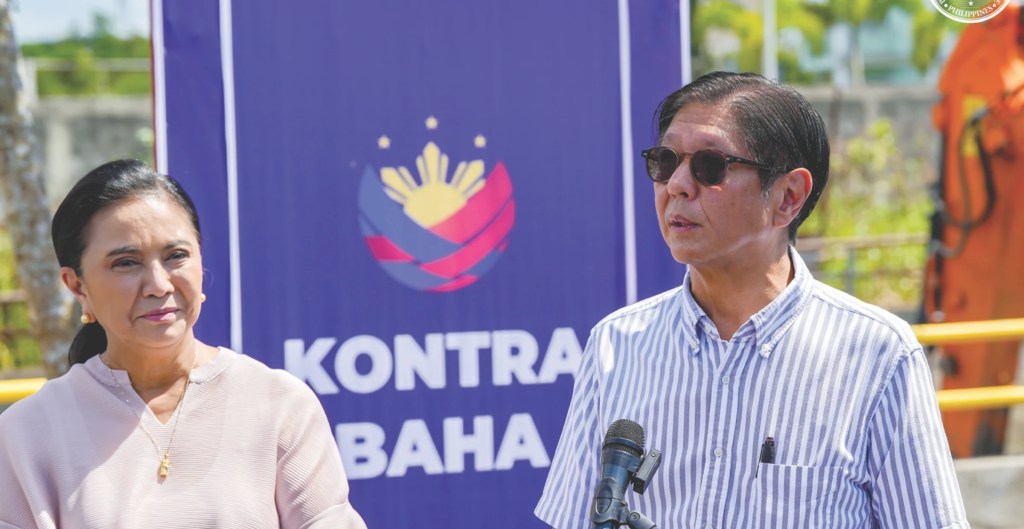
In stark contrast, the Philippines remains mired in inertia. Despite mounting evidence of corruption—including billions linked to ghost flood control projects and viral images of cash-filled offices—public outrage has yet to translate into sustained protest or political accountability. President Ferdinand Marcos Jr.’s anti-corruption rhetoric has been criticized as performative, especially given his silence on the impeachment case against Vice President Sara Duterte.
A Generation Unleashed
From Kathmandu to Jakarta, Gen Z is proving to be a formidable political force. Armed with smartphones and a deep sense of injustice, they are rewriting the rules of civic engagement. Their message is clear: corruption will no longer be tolerated, and silence is complicity.
As Nepal searches for a new leader—possibly Balendra Shah, the anti-establishment mayor of Kathmandu—the region watches closely. The question now is whether other nations, especially the Philippines, will follow suit or remain shackled by a system that Gen Z elsewhere is burning to the ground. (MBB)
(With files from Bloomberg, CBC Canada, CBS News, CNN, IB Times, MSN, Al Jazeera, South China Morning Post, ABS-CBN News, Rappler, The Diplomat)



 ReyFort Media
Leave a comment