



By Rosette Correa
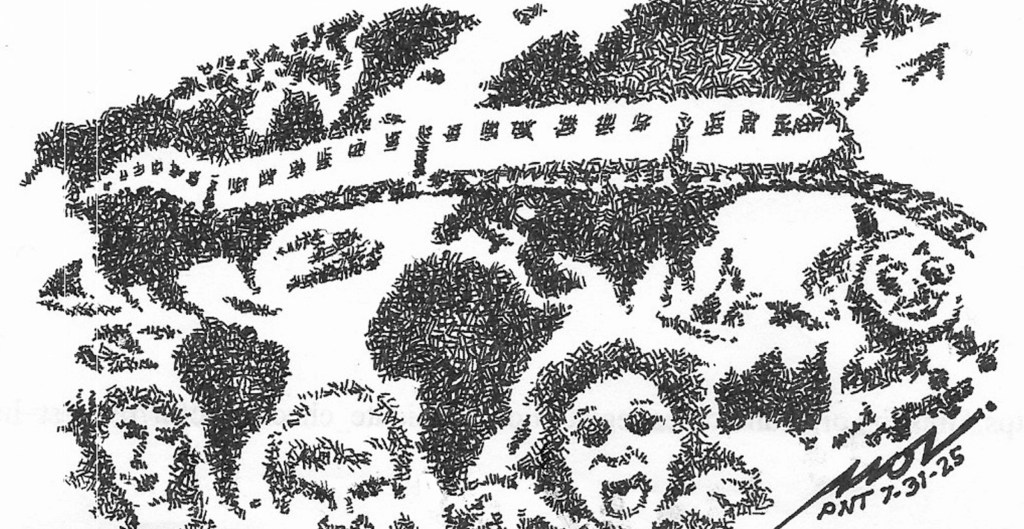
There is something uniquely telling about taking a train in a new city. Beyond the practical function of getting from point A to point B, trains offer a raw, unfiltered view into the rhythm, pace, and soul of a place. Train rides—especially from airports to city centers—can serve as cultural microcosms, revealing how a society moves, interacts, and presents itself.
Vancouver’s efficient Skytrain system is a tapestry of multiculturalism, where East meets West, and the world comes together in one single car. On the Expo Line from the city to the suburban centres, commuters fill the seats at the busiest times of the day. Tourists who simply want to get from point A to B engage the typical Canadian into a slew of inquiries on directions to places of interest. The locals assist with great fervour and the visitors hail the politeness and pleasant conversations Canadians can be known for.
In Japan, the journey from Tokyo’s Haneda Airport into the heart of the city via the Tokyo Monorail and then on to Shibuya by JR lines is a masterclass in precision and politeness. As the monorail glides smoothly past neat suburban landscapes and along Tokyo Bay, passengers ride in near silence, many engaged in solitary activities—reading, working, or sleeping. The transfer to Shibuya—a buzzing commercial and fashion hub—is seamless. Despite the volume of people, there is little chaos. Signs are clear, people queue, and everything runs on time. It reflects a society deeply rooted in order, efficiency, and respect for shared spaces.
Contrast that with London’s Underground. A ride from Heathrow to Earl’s Court on the Piccadilly Line is both mundane and majestic. The train car may be older, but the experience is steeped in tradition. Tourists with luggage and locals with newspapers share space, and while the occasional delay or grumble might occur, there is a sense of practiced urban rhythm. British understatement is alive underground; it’s common to sit across from someone in complete silence, broken only by a polite “sorry” when stepping past knees. Yet, within that silence is an unspoken code of conduct—a reflection of British reserve and resilience.
In Paris, a ride from Gare du Nord to Saint-Denis on the RER B offers an altogether different narrative. The train carries a vibrant cross-section of Parisian life: students, professionals, immigrants, and tourists. The graffiti-splashed walls along the tracks and the hum of lively conversation hint at a France that is diverse, dynamic, and sometimes divided. This is not the Paris of postcards, but the Paris of real life—a place of contrasts, tensions, and vibrant energy.
But while Vancouver, Tokyo, London, and Paris showcase different cultural identities through their train systems, they also highlight a shared value: investment in efficient, public transportation. It begs the question—why doesn’t this exist in all urban centers?
Take Manila, the capital of the Philippines. With over 13 million residents and growing, Metro Manila suffers from chronic traffic congestion and fragmented transport systems. Despite the urgent need, comprehensive rail infrastructure is sorely lacking. Projects are underway, but progress is slow, hindered by bureaucracy, funding issues, and urban sprawl. The absence of an efficient train system isn’t just an inconvenience—it’s a missed opportunity. Trains are not only a solution to mobility, they are a window into the daily life, struggles, and spirit of a city.
In this sense, building trains isn’t just about transport—it’s about dignity, access, and storytelling. A city with trains is a city that tells its story to the world and to itself. And every station, every passenger, becomes part of that unfolding narrative.





 ReyFort Media
Leave a comment