



By Gerry Saguin
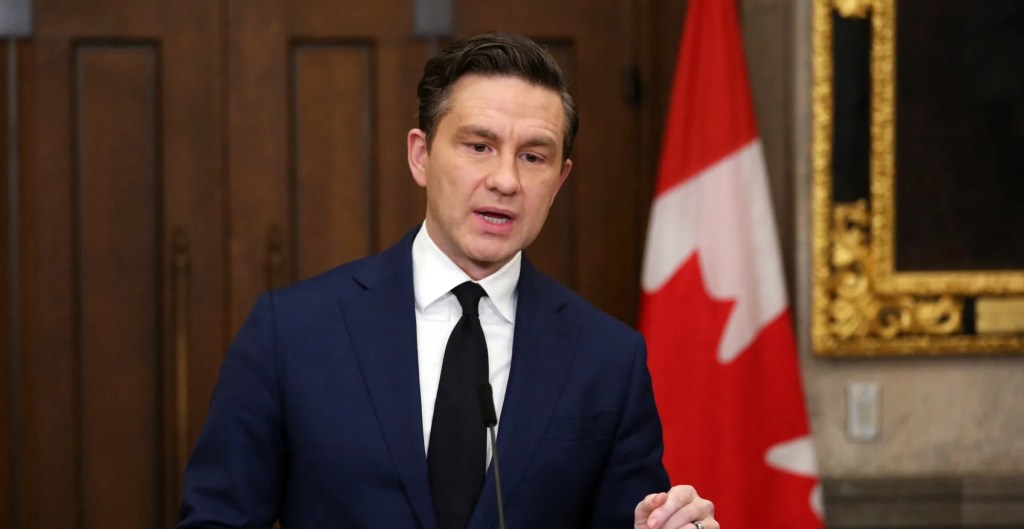
Lethbridge, Alberta – Following the recent federal election where Conservative leader Pierre Poilievre unexpectedly lost his long-held Ottawa-area riding of Carleton, the political spotlight has firmly shifted to an upcoming by-election. This time, Poilievre is seeking to return to the House of Commons by contesting the rural Alberta riding of Battle River-Crowfoot. The probability of his victory in this by-election is exceptionally high, and its impact, while largely symbolic, will still resonate across the Canadian political landscape.
A Near Certainty: Poilievre’s Path to Parliament
The by-election in Battle River-Crowfoot is widely considered a safe seat for the Conservative Party. The previous MP, Damien Kurek, secured over 80% of the vote in the recent general election and has since stepped aside to allow Poilievre to run. Alberta is a Conservative stronghold, with the party consistently commanding a strong majority of the popular vote in the province (around 59.5% in the last election, compared to 28.1% for the Liberals).
Given this overwhelming historical support, combined with the strategic decision for a sitting Conservative MP to resign for Poilievre, the Conservative leader’s victory in Battle River-Crowfoot is almost a foregone conclusion. Polls consistently show the Conservative Party with a significant lead in Alberta. The financial cost of this by-election, estimated to be upwards of $1 million, has drawn some criticism, but it underscores the perceived necessity of Poilievre’s swift return to Parliament.
The Impact on the National Political Spectrum: Beyond the Numbers
While the outcome of this specific by-election is predictable, its implications for the national political spectrum are worth examining.
1. Re-establishing Leadership and Authority:
Poilievre’s loss in his home riding was a significant blow, raising questions about his leadership, even though the Conservatives saw overall gains in the popular vote and seat count in the last election. A decisive by-election win will immediately re-establish his position as the leader of the Official Opposition, allowing him to participate in Question Period and parliamentary debates. This reassertion of his direct presence in the House of Commons is crucial for his party’s morale and for maintaining a strong challenge to the Liberal minority government.
2. Bolstering the Conservative Narrative:
A successful return to Parliament will allow Poilievre to continue pushing his party’s core messages, particularly those around fiscal responsibility and tackling the cost of living. The narrative of a leader who, despite a personal electoral setback, quickly regains a mandate through a strong show of party unity, can be leveraged to demonstrate resilience and a clear path forward for the Conservatives.
3. Symbolic Victory in a Minority Parliament:
The recent federal election resulted in a Liberal minority government. While a by-election win in a safe Conservative riding won’t change the overall balance of power in the House, it will serve as a symbolic victory for the Conservatives. It reinforces their strength in Western Canada and can be used to frame the current Liberal government as holding power on a precarious mandate, especially if national polling trends continue to show a close race between the two main parties (as of late April 2025, the Liberals held a slight lead nationally at 42.8% to the Conservatives’ 39.2%).
4. Focusing on Future Strategy:
With his seat secured, Poilievre and the Conservative Party can fully focus on their strategy for the next general election. This includes refining their platform, continuing to connect with key demographics, and capitalizing on any vulnerabilities of the incumbent government. His time out of the House, albeit short, likely provided a period for strategic recalibration, and his return will signal the party’s renewed focus.
5. Continued Scrutiny and Public Perception:
Despite the high probability of a win, the by-election itself will bring renewed media attention to Poilievre. The public will be watching to see how he re-engages with parliamentary duties and whether his rhetoric and approach evolve following the general election. The cost of the by-election, and the circumstances surrounding it, may also continue to be a point of discussion for critics.
In conclusion, while the Battle River-Crowfoot by-election may appear to be a formality, it represents a critical step for Pierre Poilievre to solidify his leadership and re-engage directly with the parliamentary process. His almost certain victory will provide a necessary boost to the Conservative Party and set the stage for their continued challenge to the national political landscape.
Photo: Dave Chan/AFP via Getty Images



 ReyFort Media
Leave a comment