



By Pat Parungao
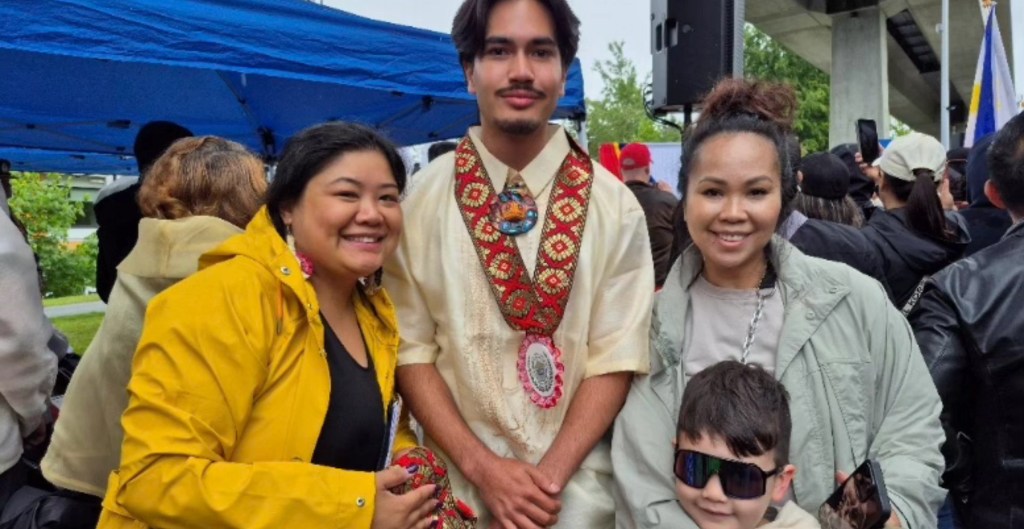
Each June, Canada celebrates both Filipino Heritage Month and National Indigenous History Month. This year, during the flag raising at Filipino Plaza to launch Filipino Heritage Month, Javen Marchant, a proud member of the Sḵwx̱wú7mesh Úxwumixw (Squamish Nation), and a person of Filipino heritage opened the event by acknowledging the traditional, ancestral, and unceded territory of the Squamish people and the deep cultural connection his people have with the land, ocean, mountains, salmon and cedar – elements central to Squamish identity and survival. For Javen, this public moment was part of a personal journey of reconnection with his roots—both Indigenous and Filipino. As part of this path, he takes time to explore not only his family’s rich cultural background but also the profound injustices they’ve endured.
One such injustice is the 1913 forced eviction of the Squamish community of Sen̓áḵw, a thriving village site for thousands of years located where Vanier Park now stands. Once a vital Coast Salish trading and cultural hub, Sen̓áḵw was known for its spiritual significance, ceremonies, and governance. The people were forcibly and permanently removed from their lands, a trauma that continues to echo through generations.
Javen also shared the story of his paternal great-grandfather Fergie Lewis who was forced to attend St. Paul’s Indian Residential School in North Vancouver. Branded as a “bad kid” for resisting the system, Fergie was relocated to another residential school in Sechelt. He ran away and returned home where he continued resistance and activism. His generation’s fight helped to pave the way for future generations – including Javen’s – who now attend regular schools like other BC students.
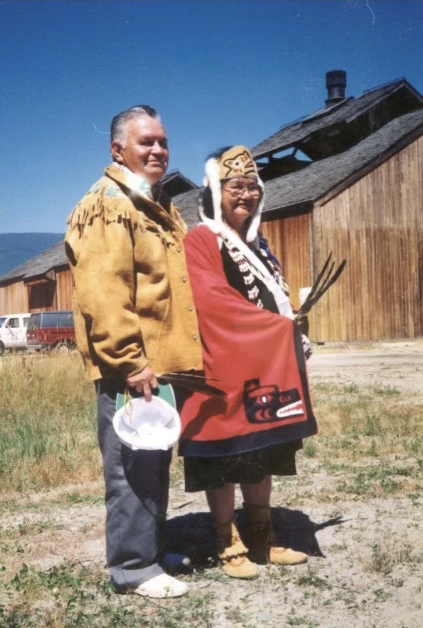
Lorne Fergueson (Fergie) Lewis and Mabel Catherine Lewis. Elders Gathering. 1990. X̱wemelch’stn (Capilano Reserve). Photo credit: Lewis family archive.
Fergie Lewis also made a lasting mark by improving his territory’s forestry practices. Adapting helicopter transport methods he saw used during the Vietnam War, Fergie became the first person to pioneer helicopter logging in Western Canada. His son, Earl Lewis, Javen’s grandfather, continues this legacy as a respected Squamish Nation forester. He shares his expertise regarding sustainable practices like selective logging with academic institutions such as UBC, SFU, and BCIT.
Continuing this family legacy, Javen has combined tradition and entrepreneurship. Alongside high school friend Camden Hussey, he co-founded Swákwel IndustrialProducts, an Indigenous-owned construction supply company aimed at increasing Indigenous participation in the construction industry and driving economic empowerment.
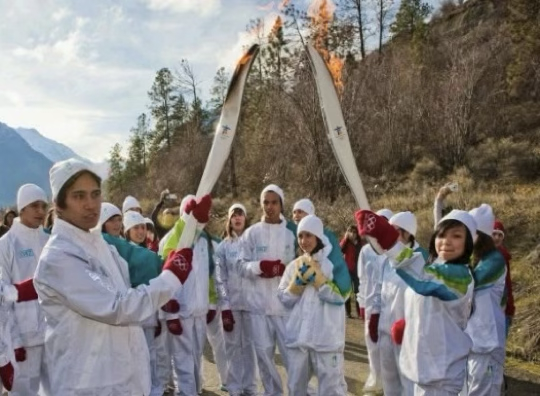
Vincent L. Chan. First Nations Snowboard Team celebrating the 2010 Winter Olympic games. Feb. 17, 2010.
< https://www.facebook.com/share/163AnHGEPv/?mibextid=wwXIfr>.
Giving back to his community is central to Javen’s values. His father, Aaron Marchant, founded the First Nations Snowboard Team in 2003 to promote healthy lifestyles and boost self-confidence among Indigenous youth (see photo). Today, Javen volunteers with the WISH Foundation, aiming to expand growth, discipline and achievement for Indigenous youth beyond snowboarding to sports like boxing—activities often out of reach due to financial barriers.
Javen’s mother, Catherine Talabucon-Santos, born in the Philippines, moved to Hong Kong as a child, then immigrated to Vancouver in 1997. She attended St. Thomas Aquinas Regional Secondary School—built on the former site of the very same residential school Javen’s great-grandfather was forced to attend. Years later, Javen attended the same school, where he – unlike most of his classmates, was keenly aware of the dark history of onsite former residential school.
Javen continues to learn about Filipino culture through family gatherings and community events. In reflecting on both his heritages, Javen has observed profound common ground between Squamish and Filipino values:
- Strong extended families and intergenerational ties.
- Respect for elders and cultural knowledge.
- Resilience in face of colonization, displacement, and racism.
- Strong sense of belonging, community, and mutual support.
- Food, gatherings, and celebration as core to culture.
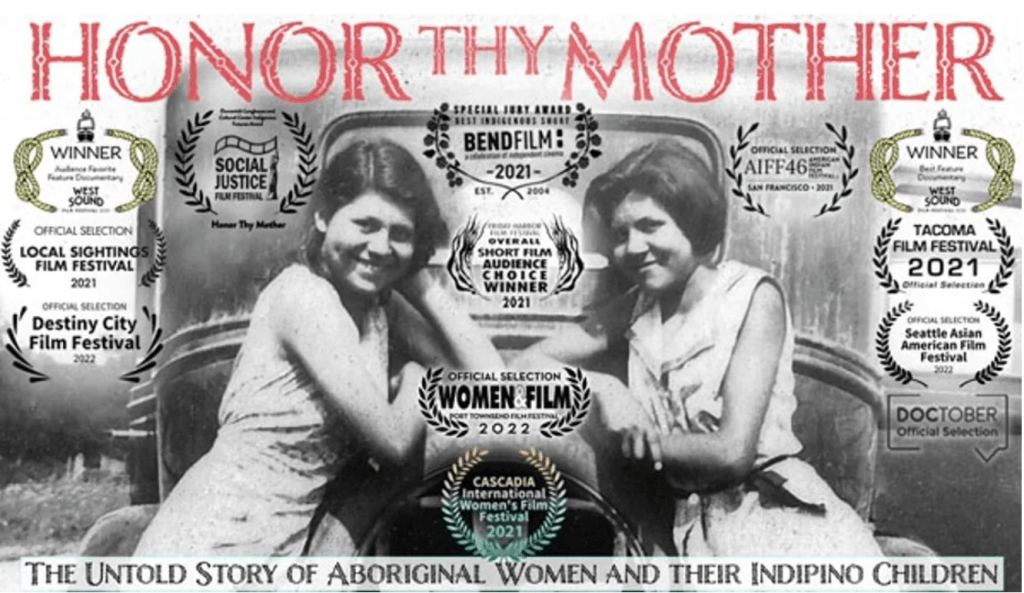
Graphic for Honor Thy Mother documentary. 2021. <https://indipinocommunityofbainbridgeisland.org/honor-thy-mother-film>.
Javen also draws inspiration from the Indipino community of Bainbridge Island in Washington State—a unique cultural group formed through the blending of Indigenous and Filipino heritage. During World War II, when Japanese Americans were forcibly interned, Filipino workers stepped in to keep the island’s strawberry farms running. Facing a labor shortage, farm owners also recruited Coast Salish workers, including members of the Squamish Nation. The collaboration between these communities led to deep relationships, intermarriage, and the birth of the Indipino identity. Currently over 300 Squamish Nation members live in Bainbridge Island. There is also a significant Filipino American Community on Bainbridge Island (since their arrival in the 1930s). Both groups experienced displacement and systemic oppression, yet through resilience, unity, and shared struggle, they built a strong, enduring community. Their story is powerfully told in Gina Corpuz’s 31-minute documentary, Honor Thy Mother: The Untold Story of Aboriginal Women and Their Indipino Children.
As Canada reflects this month on both Indigenous and Filipino heritage, voices like Javen Marchant’s remind us of the beauty and strength found in dual identities. His story weaves together a legacy of survival, cultural pride, and a vision for a more just and inclusive future.

 ReyFort Media
Leave a comment