



By Pat Parungao
Dragon boat racing dates back over 2,400 years to the Warring States period in China. A popular legend attributes the origin of the races to the tragic story of Qu Yuan, a Chinese poet and official who drowned himself in despair in the Miluo River, a tributary of the Yangtze, in 278 BCE in protest against the ruling class and the decline of his state. When local villagers found out about Qu Yuan’s death, they raced their boats to save him, beating drums and splashing water to ward off fish and evil spirits. Unable to recover his body, they threw zongzi (glutinous rice dumplings) into the river to prevent his body from being eaten by fish and to protect his remains. Duanwu Jie continues to be celebrated every year on the fifth day of the fifth month of the lunar calendar in various locations in China and Southeast Asia. The International Dragon Boat Federation recognizes 75 countries or territories that hold dragon boat races. Because the date is based on the lunar calendar, it falls on different days each year of the Gregorian (world’s standard) calendar, typically in late May or June.
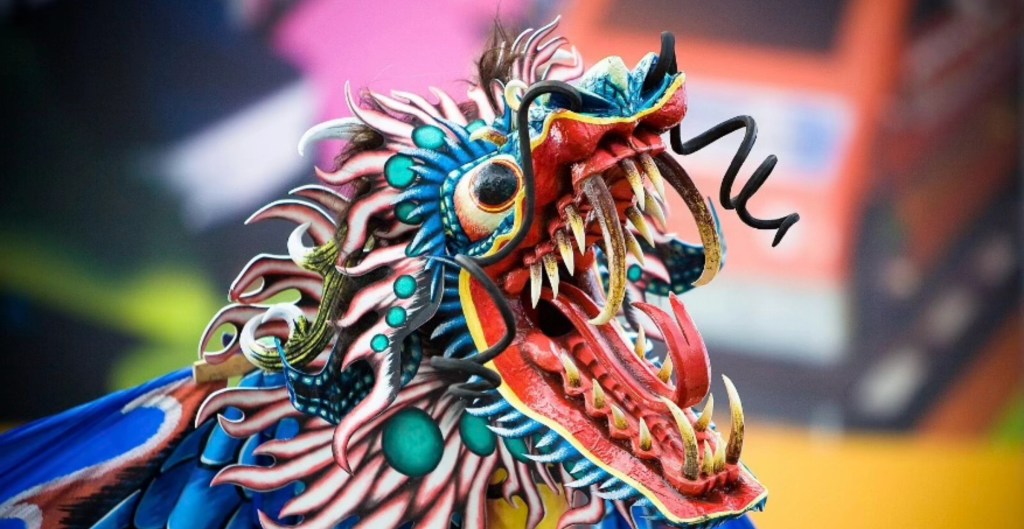
A dragon boat is both a vessel of cultural heritage and a competitive sports craft that combines history, teamwork, and celebration. Features of a Dragon Boat include a dragon’s head at the bow and a tail at the stern, representing strength, courage, and power. It is often painted with scales to resemble the mythical creature. The crew typically consists of a drummer, paddlers, and a steerer. Dragon boat racing can be recreational or competitive. It is open to anyone who can hold a paddle and sit in the boat, including individuals with disabilities. It emphasizes teamwork and synchronization, requiring all paddlers to work together in rhythm.
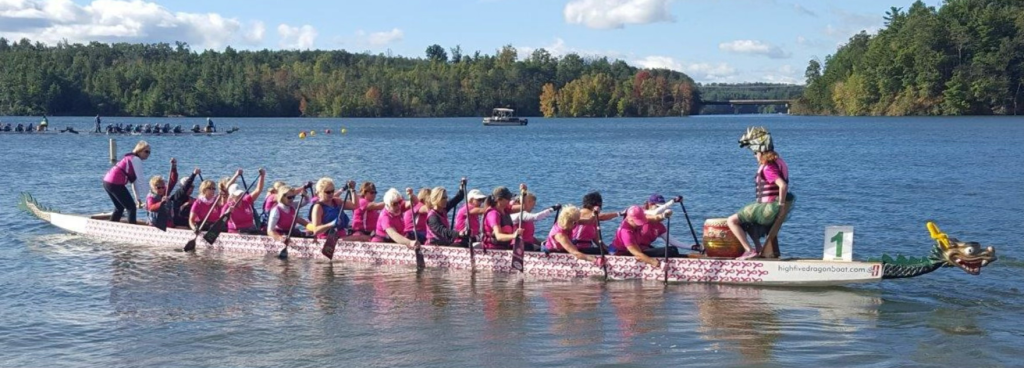
KAHLUA 20-person Dragon Boat. < https://www.dragonboatsales.com/used-boats.html>.
Dragon Boat Festivals in British Columbia and Alberta
- The Concord Pacific Dragon Boat Festival – False Creek, Vancouver, on June 20 to 22, is the largest of its kind in North America. It started during Expo 86 as a cultural outreach event by the Chinese-Canadian community and now features over 200 racing teams from around the world, live performances, artisan markets, and food stalls representing multiple Asian cuisines.
- Lethbridge Rotary Dragon Boat Festival – Henderson Lake on June 27 to 29.
- Harrison Dragon Boat Festival – Harrison Lake on July 26.
- Calgary Dragon Boat Race & Festival – North Glenmore Park on August 8 – 10.
- Edmonton Dragon Boat Festival – Telford Lake, Leduc on August 17 & 18.
- FreshCo Richmond Dragon Boat Festival – Steveston on August 23.
- Canada Dry Victoria Dragon Boat Festival – Victoria on August 23-24.
- Penticton Dragon Boat Festival – September 6 & 7.
Zong / Zongzi
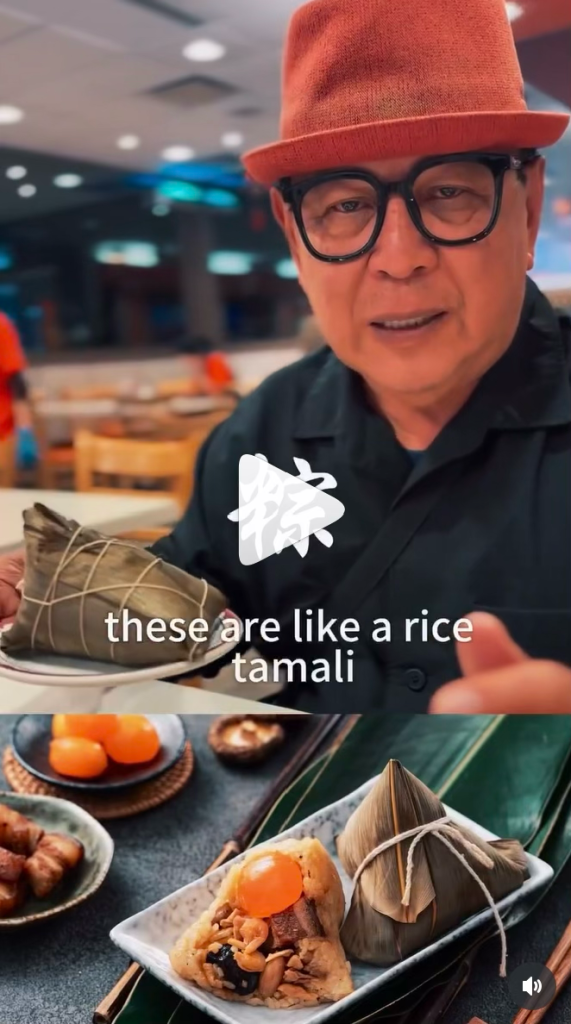
Bob Sung. It’s time for Zong! May 2025. < https://www.instagram.com/reel/DKDkjnZS93Y/>.
Dragon Boat Festival food, zongzi, are pyramid-shaped dumplings, wrapped in bamboo leaves which are filled with glutinous rice and other ingredients such as sweet red bean paste, savory pork belly and Chinese sausage then steamed or boiled.
Chef turned tour guide Robert Sung of “A Wok Around Chinatown” (a Vancouver culinary and cultural walking tour) shares his love of zongzi and explains how zong are made by hand in the following Instagram reels:
- It’s Time for Zong! at https://www.instagram.com/reel/DKDkjnZS93Y/
- June is here, and so is ZongZi season! at https://www.instagram.com/reel/DKaOggQycuk/
Canadian children’s book recommendation: Awakening the Dragon: The Dragon Boat Festival (see photo) by respected librarian and avid dragon boat racer Arlene Chan and beautifully illustrated by Song Nan Zhang.
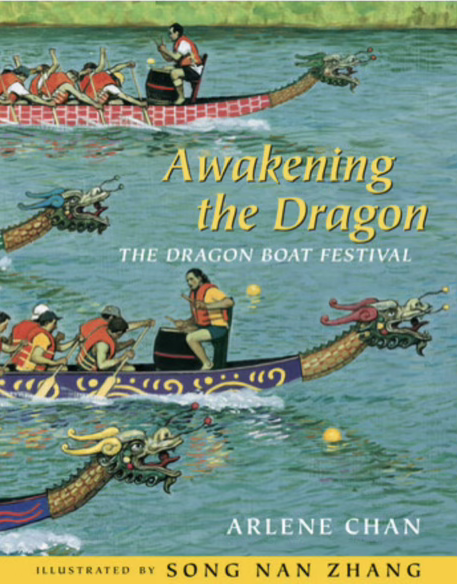
Book cover. < https://www.penguinrandomhouse.ca/books/25970/
The Dragon Boat Festival was inscribed into the 2009 UNESCO Representative List of the Intangible Cultural Heritage of Humanity, as it “strengthens bonds within families and establishes a harmonious relationship between humanity and nature. It also encourages the expression of imagination and creativity, contributing to a vivid sense of cultural identity.” (https://ich.unesco.org/en/RL/dragon-boat-festival-00225).
This festival serves as a platform for cultural exchange, fostering understanding and appreciation among diverse communities. Through dragon boat racing, cultural performances, and the sharing of traditional foods like zongzi, the festival continues to thrive as a valued tradition in Pacific Canada.



 ReyFort Media
Leave a comment