




By Pat Parungao
In May 1914, the Komagata Maru, a Japanese steamship arrived at Vancouver’s Burrard Inlet, carrying 376 hopeful immigrants from British India, mostly Sikhs, Muslims, and Hindus. Instead of a new beginning, they were met with weeks of injustice, racial hostility, and rejection. Currently, Harbhajan Gill, President of the Komagata Maru Heritage Foundation continues to work toward ensuring that this dark episode in Canadian history is preserved and that those who suffered aboard it are never forgotten.
A Journey Denied
The journey of the Komagata Maru began on April 4, 1914 in Hong Kong and arrived in Vancouver on May 23, carrying 376 passengers – some who were veterans of the British Indian Army – from over 121 villages across present-day India and Pakistan who were hoping to settle in Canada.
They believed that as British subjects it was their right to settle anywhere in the empire, including Canada. A legal battle emerged with officials citing Canadian discriminatory and racist immigration policies, like the Continuous Journey Regulation, a law specifically created to keep out non-European immigrants. During a two-month standoff, the ship sat in Burrard Inlet and the passengers were denied entry, food, and basic needs. Unverified reports identify that Indigenous people, including Musqueam elders, helped to feed the passengers by delivering food and water to the ship. Additionally, the Indian community in Canada, including those who had already settled in the country, collected money and provisions to support the passengers.
On July 23, 1914, the ship was escorted out of Vancouver harbour by the Canadian military and forced to return to India. Upon arrival in Calcutta, many of the passengers were imprisoned, short or killed as British officials viewed them as potential revolutionaries.
“This injustice made 5,400 people who had settled here go back (to India) within six months,” says Gill. “They felt they did not belong in Canada.” Citizenship for people from India and other Asian countries living in Canada was not granted until 1947.
Telling Stories that Matter
Harbhajan Gill is also a former president of the Pacific Canada Heritage Centre – Museum of Migration Society (PCHC-MoM), and he actively continues to support PCHC-MoM programs to ensure migration stories are preserved and shared. For Gill and others who support PCHC-MoM, remembering incidents like this is about more than history—it’s about teaching and healing. “We should have a place where all cultures are represented,” Gill emphasizes. “Canada’s story is made up of many.”
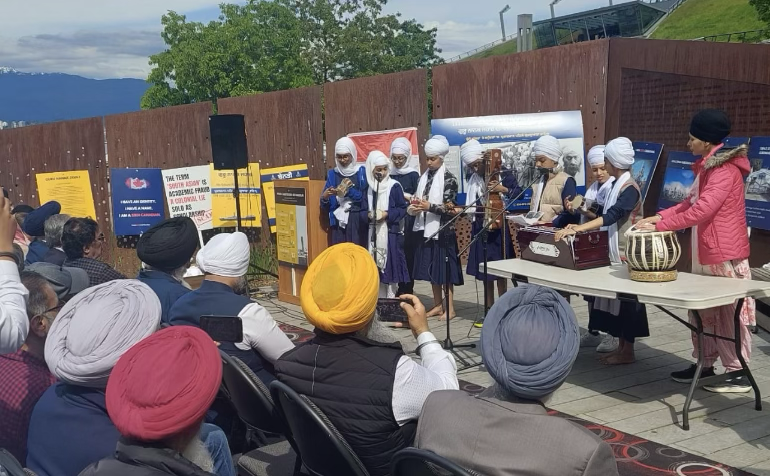
111th Anniversary of the Guru Nanak Jahaaz at the Komagata Maru memorial. May 25, 2025.
Photo Credit: Harbhajan Gill.
Gill advocates for storytelling through digital media, paper archives, and public monuments. A memorial in Vancouver facing Burrard Inlet where the Guru Nanak Jahaz (Komagata Maru) was anchored 111 years ago now bears the names of those on board the ship (see photo). However, the monument itself has not been free from hate—it has been defaced, vandalized, and even urinated on.
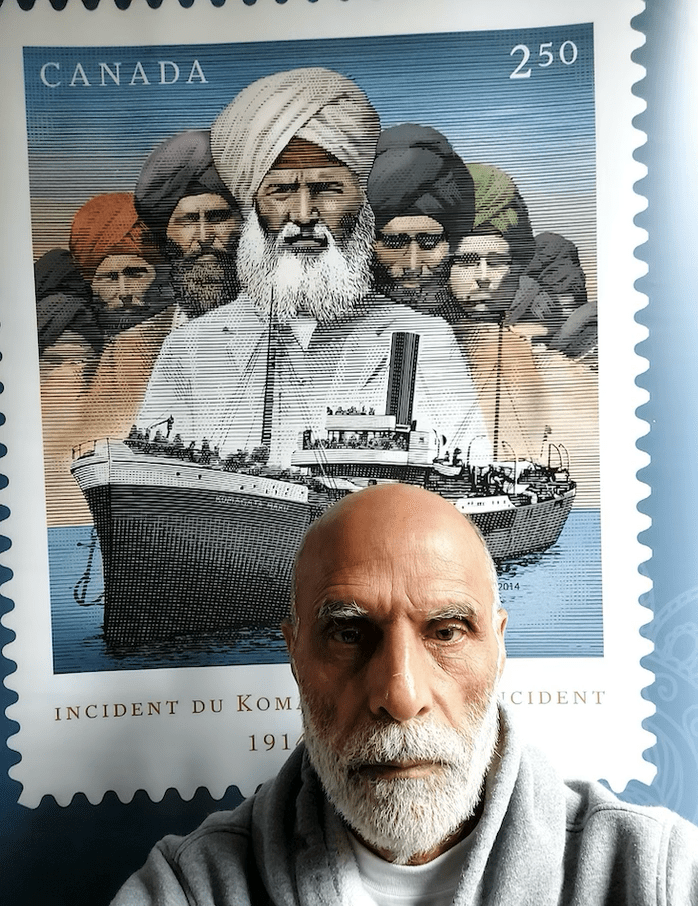
Harbhajan Gill with image of the Komagata Maru 100th anniversary postage stamp.
Photo credit: Harbhajan Gill.
In 2014, Canada Post issued a commemorative stamp to honor the centennial of the Komagata Maru. This move brought national and international attention to the story. That surge in awareness, Gill believes, helped push the federal government to issue a formal apology in Ottawa in 2016. British Columbia had already apologized in 2014, but the federal apology “took over a hundred years, but the apologies felt sincere,” he says.
Looking Ahead
Gill has encountered pushback—even racism—for his efforts to keep the memory alive. “People ask me, ‘Why are you still doing this? It happened 70, 80 years ago.’ But it’s about ensuring it doesn’t happen again.” Gill emphasizes that apologies, while necessary, must be accompanied by real change. “We’ve seen this kind of racism before—the Chinese Head Tax, the internment of Japanese Canadians during WWII. It’s not just history—it’s our responsibility.”
Honouring the First Peoples
Gill also believes that any discussion of injustice in Canada must begin with recognition of Indigenous Peoples. “Land Acknowledgement is part of Canadian culture now. We must first understand the culture of First Nations, because they were here first. Only then can we bring in our cultures and truly share this land.”
As Canada continues to wrestle with its complex history, voices like Harbhajan Gill’s are vital. In preserving the past, he’s also helping to shape a more just and inclusive future.
“We do this for a better future Canada. And that starts with knowing where we’ve been. We can’t change the past, but we can learn from it.”



 ReyFort Media
Leave a comment